(800) 682-9444
Call Now


Electric wheelchairs have come a long way since their inception. Over the past decade, we've seen great advances in electric wheelchair technology that make it easier than ever before for people with limited mobility to navigate their world freely and independently.
Whether you have a health condition or you’re unable to walk on your feet for long periods of time, buying an electric wheelchair requires some basic product knowledge, hence our ultimate power chair buying guide. In order to make the right purchase when you are looking to buy a power wheelchair online, you should know about the types of models and major brands that are available on the market.
Most manufacturers will not sell power wheelchairs to consumers, but would rather utilize a dealer, like us, who sells them to the end-user, which is you. If you don’t do research or have some basic knowledge about the product that you are going to buy, you could end up with a product that doesn't suit your needs.
We pride ourselves on adding as much valuable information and product specifics on every product page and by having a FAQ section that is updated often. Learning a little about the industry and product that you are going to buy is a great way to ensure your buying experience is a good one.
As more choices become available, however, navigating the multitude of options can feel overwhelming. Don’t let all the bells and whistles distract you from an important decision—investing in an electric wheelchair is serious business!
Let Electric Wheelchairs USA guide you through today's impressive range of innovative electric wheelchairs and help you pick out a model that best fits your needs so you can get rolling in no time!
The post covers each drive type individually — but after reading all five sections, many buyers still don't know which one fits their situation. This framework maps the key decision factors to the right drive type.
Choose Mid-Wheel Drive if:
You spend most of your time indoors — in your home, stores, medical offices, or restaurants
Indoor maneuverability is your top priority — mid-wheel drive chairs can spin nearly in place and navigate tight doorways better than any other type
You want the most intuitive driving experience — because the drive wheels are directly under the seat (mimicking where your feet would be when walking), most new users find mid-wheel chairs the most natural to operate
You want the best combination of indoor use and light outdoor capability
Choose Front-Wheel Drive if:
You navigate inclines and varied terrain regularly and need a chair that pulls over obstacles rather than pushing through them
You want to get closer to tables, counters, and sinks while staying in the chair — the front-wheel design allows you to position the seat very close without casters in the way
You need a smaller turning radius for community settings like malls and grocery stores
Choose Rear-Wheel Drive if:
You spend significant time outdoors and prioritize speed and power over tight indoor turning
You cover long distances on varied outdoor terrain — rear-wheel drive delivers the highest top speeds and strongest outdoor stability
You need a chair that performs reliably in a wide range of outdoor environments
Choose Portable if:
You travel frequently — by car, plane, or cruise ship
You need the chair to fit in a standard car trunk without special equipment
Airline compatibility is a priority (many portable chairs use lithium-ion batteries that comply with FAA limits)
You live in a smaller home or apartment with limited storage space
You are more active and use the chair part-time rather than all day, every day
Choose Bariatric if:
You need a weight capacity above 300–330 lbs (always apply the 20–30 lb buffer rule — stay at least 30 lbs under the rated capacity)
You need a wider seat to accommodate your body comfortably
You need maximum motor torque and long battery life for sustained daily use at higher weight
The single most important question: Where will you spend 80% of your time in this chair?
If the answer is indoors — mid-wheel drive. If the answer is outdoors — rear-wheel or front-wheel. If the answer is "traveling and out and about" — folding or portable. If your body weight exceeds 300 lbs — bariatric, regardless of environment.
This section addresses the most common questions from buyers — including the reader who asked about "speed and range and degree of ascent." Here's what every key specification means in practical terms.
Battery Range: Manufacturer range ratings are tested under ideal conditions: flat surface, moderate speed, lighter rider. The real-world range you'll experience is typically 20–30% less depending on your body weight, the terrain you travel, and the speed at which you ride. Hills are the biggest range reducer — climbing a grade at full weight can drain the battery 2–3× faster than flat riding.
Practical rule: Choose a chair whose rated range exceeds your typical daily distance by at least 30–40%. If you travel 8 miles on a typical day, look for a chair rated for at least 11–12 miles.
Weight Capacity: The rated weight capacity is the maximum load the chair is structurally designed to support. The post already notes you should stay 20–30 lbs under capacity — here's why: operating at or above capacity causes the motor to run at maximum output, generating excess heat that shortens motor life. Battery range drops significantly near maximum capacity. Frame stress accumulates faster. And in worst cases, the frame itself can be damaged.
If your body weight puts you within 30 lbs of a chair's maximum capacity, choose the next capacity tier up.
Turning Radius: Turning radius is the diameter of the smallest circle the chair can complete without reversing. Smaller = more maneuverable. This directly determines whether a chair can navigate standard US doorways (32"–36" clear opening) and maneuver in rooms.
Real-world reference:
Under 24" (e.g., Pride Jazzy EVO 614HD at 22"): Can spin nearly in place — navigates virtually any indoor space
24"–36": Excellent indoor maneuverability — handles standard home environments well
36"–50": Good for most environments — may require a bit more planning in tight spaces
50"+: Better suited to open outdoor environments; requires significant floor space for turns
Top Speed: Standard power wheelchairs travel at 4–6 mph. Heavy-duty outdoor and bariatric models may reach 8 mph or slightly more. For context, a brisk walking pace is about 3.5–4 mph. At higher speeds (above 5 mph), stopping distances increase and more care is required in pedestrian environments.
Incline / Degree of Ascent: Published incline ratings (the "degree of ascent" Rodger asked about) tell you the maximum slope the chair can safely climb. Common ratings:
8 degrees ≈ a challenging residential driveway (~14% grade)
10 degrees ≈ a moderately steep ramp (~17% grade)
12 degrees ≈ a steep outdoor grade (~21% grade)
As the post notes, a climbing degree "between 8 degrees and 12 degrees will perform well uphill" — but regularly climbing near the maximum incline rating will drain the battery significantly faster and accelerate motor wear.
Motor Wattage: Higher wattage delivers more torque for hill climbing and terrain capability. Standard indoor power chairs: 200–350W per motor. Heavy-duty outdoor and bariatric chairs: 400–700W or more per motor. If incline performance is a priority, look for chairs with higher motor wattage rather than just the stated climbing degree.
Seat Dimensions: Width, depth, and height each affect both comfort and medical outcomes:
Seat width: Measure hip width at the widest point and add 2 inches on each side for comfortable clearance
Seat depth: Should allow 2–3 inches of clearance behind the knees when seated upright — prevents circulation restriction behind the knee
Seat-to-floor height: Affects how well you can position under tables and counters; higher seats make transfers easier
Ground Clearance: Even small differences in ground clearance matter for daily navigation. A chair with 2" clearance will bottom out on a 1.5" door threshold; a chair with 3" clearance clears it. For outdoor use (grass, gravel, uneven terrain), 4"+ ground clearance is needed. Indoor chairs typically have 1.5–3" clearance, which is appropriate for smooth floor surfaces.
The post's current closing line says mobility scooters "can generally go much faster and if you have the ability to use both hands, you can operate these similar to steering a car." That sentence contains the most important differentiator — here's the full comparison.
The critical difference: how you control it: A mobility scooter uses tiller steering — a handlebar system that requires both hands and reasonable upper body function, similar to steering a bicycle or car. A power wheelchair uses a joystick — typically controlled with one hand, often with a single finger, requiring minimal strength.
This single difference determines which category is appropriate for many users before any other spec matters.
Choose a power wheelchair if:
You have limited function in one or both hands (following stroke, MS, ALS, severe arthritis)
You need joystick control because hand tremors make precise tiller steering difficult
You primarily need mobility assistance indoors or in tight spaces (power chairs, especially mid-wheel drive, are significantly more maneuverable indoors than scooters)
You have complex positioning needs — power chairs accommodate tilt, recline, seat elevation, and other seating systems that scooters cannot
Your physician has documented specific medical necessity for a power wheelchair (which affects Medicare classification)
Choose a mobility scooter if:
You have full or near-full hand function and can comfortably operate tiller steering
You primarily need mobility assistance outdoors for community use — scooters generally offer longer range and higher speed for covering ground
Budget is a significant consideration — comparable scooters are often less expensive than power chairs
You want a device that looks and feels less "medical"
Conditions that typically point to power wheelchair: Stroke with hemiplegia, ALS (amyotrophic lateral sclerosis), MS (multiple sclerosis) with hand involvement, cerebral palsy, spinal cord injury, severe rheumatoid arthritis affecting hands, traumatic brain injury affecting coordination.
Conditions that may work with either: Lower extremity conditions (fractures, amputation, severe peripheral vascular disease, Parkinson's in earlier stages), COPD or cardiac conditions limiting walking endurance, obesity limiting walking ability.
Medicare differences: Both power wheelchairs and mobility scooters can qualify for Medicare coverage. Scooters are classified as "power-operated vehicles" (POVs) under Medicare Part B. Power wheelchairs are classified separately (Group 2 or Group 3 depending on features). The documentation requirements differ — speak with your physician about which classification applies to your specific medical need.
See our full Mobility Scooter Buying Guide for a comprehensive guide to the scooter category.
Most buyers focus on drive type, brand, and battery range — and give seating minimal thought. This is a mistake. For daily power wheelchair users who spend 4–12 hours per day in their chair, seating quality directly affects health outcomes. Poor seating causes pressure sores, spinal misalignment, and secondary musculoskeletal conditions over time.
Standard seating vs. specialized seating systems: Basic power wheelchairs come with sling or foam seat cushions — adequate for part-time users. For daily full-time users, upgrading to a specialized cushion system is strongly recommended:
Foam cushions: Basic, affordable, degrade over time (replace every 1–2 years), minimal pressure relief
Gel cushions: Better pressure redistribution than foam, temperature-regulating, heavier
Air cell cushions (like Roho systems): Clinical-grade pressure relief — the standard recommendation for users at risk for pressure sores; require inflation maintenance
Hybrid foam/gel: Balance of performance and durability — a good everyday choice
How to measure your seat correctly: Follow the measurement guidance from the specs section: seat width = hip width + 2" per side; seat depth = measure from back of buttocks to back of knee and subtract 2"; seat height = floor to thigh, affecting table/counter clearance and transfer height.
Power seating systems — what's available and who needs it
Tilt-in-Space: The entire seating surface tilts backward while maintaining the hip/knee angle. Primarily a medical/clinical feature — redistributes pressure to prevent pressure sores, manages tone in neurological conditions, improves respiratory function. Medicare HCPCS code K0861 covers power tilt when medically documented.
Recline: The back reclines independently of the footrest while the seat surface stays level — the user shifts into a reclined position. Different from tilt. Used for pressure relief, bladder management, and comfort during long sessions.
Power Seat Elevation: The seat height raises vertically — allowing the user to reach countertops, ATMs, and high shelves, and engage at face level with standing people. The Jazzy Air 2 elevates 12 inches while the chair is in motion — a significant functional independence feature.
Standing Power Wheelchairs: Transition the user from seated to a fully standing position — with documented benefits for bone density, circulation, and spasticity management. The Karman XO-505 achieves full standing in under 15 seconds.
Headrests and positioning supports: For users with insufficient head control (cervical spinal cord injury, ALS, advanced MS), a headrest is not optional — it's a clinical necessity that affects safety during driving and positioning. Lateral trunk supports, hip guides, and footrest positioning all similarly affect both safety and health outcomes.
When to involve an occupational therapist: For users with complex seating needs (pressure injury history, postural deformity, neurological conditions, custom positioning requirements), a seating evaluation by a certified assistive technology professional (ATP) or occupational therapist (OT) before purchasing is strongly recommended. An OT can measure you precisely and recommend the right seating system alongside the right chair.
Pride Mobility, Merits Health Health Products, and ComfyGo are the most popular manufacturers that make electric wheelchairs and they provide excellent products with great manufacturer warranties.

Merits is a company that provides reliable, expertly engineered solutions for nearly every need. Their innovative designs constitute years of experience and research to fully understand the special needs of individuals. Through years of consultations, personal contacts, and studies, this company has adapted every way conceivable to satisfy their customers efficiently with quality and professionalism. Backed by the latest state-of-the-art manufacturing facilities, they develop high-quality healthcare products at fair prices. Some of the more popular electric wheelchairs by this company are the P322, the P310 and the P101.


Pride is perhaps the biggest brand in the mobility industry. Founded in 1986, they have a long history of creating designs that offer cutting edge technology and many of their products offer patented features that you cannot find anywhere else. They are a big name player and offer an extensive line of products from lift chairs to mobility scooters and to, of course, electric wheelchairs. Many of their products can be customized to suit the needs of the user. Some of the most popular power wheelchairs that this company offers are the Go Chair, and the Jazzy Elite HD.

Say goodbye to clunky, bulky wheelchairs! ComfyGo is the up and coming brand in mobility that makes its mark with innovative technology. Their foldable designs make it easy for you to travel without sacrificing comfort - making these lightweight wheels perfect for even active lifestyles.
ComfyGo's top-selling IQ-8000 Limited Edition power wheelchair is more than just luxurious looks and quality materials - this game changing electric wheelchair weighs in as one of the lightest electric wheelchairs on the go! Riding it with ease turns into a breeze when you control your speed using its convenient remote, so now anyone can enjoy maximum mobility without needing an attendant.
You’ll also find amazing value in their IQ-7000 and IQ-9000 series of power wheelchairs as well, with each model designed for maximum comfort and suited to specific lifestyle needs.
Each of the 3 above brands are the top power wheelchair brands in the industry. Combined they have over 70 years of experience and continue to push the envelope in the power chair industry. All 3 have some of the best product warranties in the industry as well, so you know you will be taken care of.

Now that we gotten the best brands out of the way, lets get into the types of power wheelchairs on the market, because their several; and you should know the differences...

Folding Power Wheelchairs are made for people who are active and want to travel with their power chair. Are you tired of lugging around a heavy and bulky wheelchair when you travel? And let's not forget the inconvenience of having to charge an electric wheelchair on the go. They can be folded and fit into compact spaces such as the trunk of a car or a storage closet. Well, the solution is here - a folding electric wheelchair! These lightweight wonders come in models as low as 45 pounds and easily fit into vehicles with minimal storage space required.
Plus, the best part is that they simply fold up instead of needing to be disassembled. Electric wheelchairs that fold are known to have a weight capacity that is lower than average mostly because the framework is made with lightweight material not capable of supporting heavy weight. However, there are a few exceptions and those units can hold more, but tend to weigh more for the user to lift as well. Say goodbye to travel headaches and hello to mobility freedom with a folding power wheelchair.


Front Wheel Drive Power Chairs have their wheels in front of the seating area, which in effect allow the unit to pull itself over terrain and obstacles. This configuration is lauded for being very stable up and down hills and on uneven terrain. Because a front-wheel drive chair pulls from the front rather than pushing from the back, it’s good at handling softer terrains, such as grass.
Foot positioning can also be easier because there are no front casters to interfere with foot placement. Therefore, the front-wheel drive design can keep the user's feet positioned closer to the body. However, turning a front-wheel drive chair can take a little getting used to because most of the chair is in the back of you, so you have to be aware of what is behind you. These types of electric wheelchairs can fishtail at higher speeds, so they tend to have lower top speeds than others.

Have you ever struggled to maneuver in tight spaces and make turns without feeling like you're going to hit something? These chairs feature a smaller turning radius, making it a breeze to move around confined spaces and corners. Plus, with bigger wheels and a wider wheelbase, you'll enjoy an impressive ground clearance. Say goodbye to awkward movements and hello to smooth sailing with our products.

Mid-Wheel Drive Electric Wheelchairs have the drive wheels in the middle of the unit and not at the front of the chair or the back. Because of their ability to basically spin in place, mid-wheel drive chairs are highly maneuverable, going through doorways or turning in tight spaces. These types of power wheelchairs are also considered more intuitive to drive, especially among consumers who have been ambulatory, because the drive wheels are underneath the seat which mimics the location of our feet when we walk.
Mid-wheel drive power chairs also have more difficulty in climbing obstacles than front-wheel-drive chairs do. Some manufacturers have developed technology to compensate, so some mid-wheel drive chairs now drive more smoothly, and are more adept at climbing obstacles.

Plus, out of all the drive wheel options, mid wheel drive is the most stable thanks to its six wheels - two drive wheels and four casters - which help keep the chair balanced. Bonus: these chairs have fantastic traction on all sorts of surfaces. So, if you want a comfortable and reliable ride, consider a mid wheel drive power wheelchair.

Rear-Wheel Drive Electric Wheelchairs are known for their power, making it a favorite among consumers who spend a lot of time outdoors or traveling over tougher terrains. Rear-wheel drive has been traditionally capable of offering the highest top speeds, which is a plus for the consumer who has to cover a lot of ground. They also have a reputation for the best overall stability in a variety of different environments.
Its main drawback: With drive wheels in the back, rear-wheel drive chairs have a larger turning radius and therefore cause larger footprints, since the entire chair has to clear the corner before making a turn. Rear-wheel drive chairs are also less intuitive to learn to operate because they don’t closely mimic the way a person walks.

Because they're equipped with two big drive wheels at the back and two other wheels in front, the cool thing about these chairs is that their source of power is located where the drive wheels are. Trust us, they've got some serious power and can even drive smoothly on soft ground. If you come across an incline, these chairs have got you covered with a smooth uphill drive. Plus, they're equipped with suspension and shock absorbers on all four wheels. So, if you're looking for a durable and powerful chair, rear wheel drive power chairs are definitely worth a look!

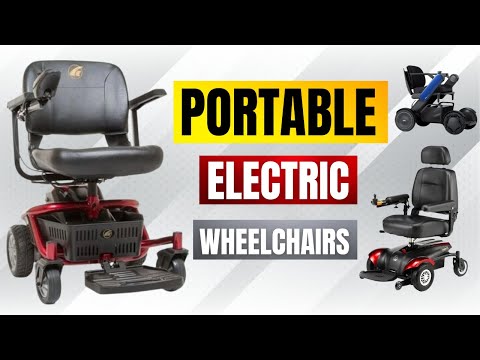
Travel Power Chairs are much lighter than most power chairs and these types of chairs disassemble into smaller pieces making them easy to store away and transport while traveling. They usually have a smaller body frame as well which allows them to squeeze through tight spaces such as doorways or hallways without hassle.
Although they do not last as long as most standard or heavy-duty power chairs, these types of power chairs are a great option for someone who lives an active lifestyle and is always on the go.

Looking for a hassle-free way to get around town or travel long distances? A portable electric wheelchair might just be the perfect solution for you. These lightweight wheelchairs can be easily loaded onto any vehicle, making them incredibly convenient for those on the go.
And the best part? Some models are even airplane-friendly, which means you can bring them along with you on your next flight. Plus, their narrow design will allow you to effortlessly navigate the airplane aisle or store them in an overhead compartment.

Bariatric Power Chairs are also a great option for someone who likes to go indoors and outdoors. Plus, they are made to support above average-sized riders. There are many options to choose from that can carry anywhere from 400 to 700 lbs in weight capacity. These heavy-duty models usually have a lot more torque to add to their performance and also longer lasting battery life. Most importantly a majority of bariatric power chairs come with solid or flat-free tires making them durable enough to smoothly ride through most rugged terrains.
These power wheelchairs are tough cookies! You can count on them to last and withstand all kinds of wear and tear. They're made with sturdy materials that can take a beating. Don't worry about your size - these heavy-duty power wheelchairs can handle anyone. With their high-quality frames and exteriors, they're worth the investment.
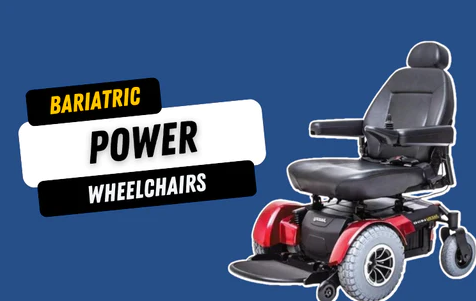
If you're looking for more power, these heavy-duty models deliver. They pack in larger motors, longer frames and stronger torque than lighter power chairs. Navigating bumpy or uneven terrain is no problem either. These power chairs are designed to handle tough circumstances with ease.
The best electric wheelchair depends entirely on your primary use environment and physical needs. For tight indoor spaces and everyday community use: a mid-wheel drive chair like the Pride Jazzy 600 ES or Jazzy EVO 614HD (22" turning radius). For frequent travelers who need airline compatibility: a folding power chair like the ComfyGo IQ-9000 (52 lbs, airline approved) or Feather Mobility (33 lbs). For users over 330 lbs: a bariatric chair rated 30+ lbs above your body weight. Use the drive type decision framework above, then call 800-682-9444 — our team matches buyers to the right chair every day.
Yes — Medicare Part B covers power wheelchairs when prescribed by a physician and deemed medically necessary. Coverage requires: a face-to-face physician examination within 6 months of the order; documentation that the patient cannot perform mobility-related daily activities in the home without a power wheelchair; a Certificate of Medical Necessity; and purchase from a Medicare-enrolled authorized supplier. Medicare pays 80% of the approved amount after the Part B deductible. Power wheelchairs are classified as Group 2 or Group 3 depending on features — the classification affects the covered amount.
Power wheelchairs range from approximately $1,500 to $8,000+ depending on type and features. Budget tiers: folding/portable travel chairs $1,500–$3,000; standard mid-wheel or rear-wheel drive everyday chairs $2,000–$4,500; premium heavy-duty or feature-rich chairs (elevating seat, advanced suspension) $3,500–$8,000+; bariatric models $2,500–$6,000+. Medicare coverage can reduce out-of-pocket cost significantly for qualifying buyers. Financing through Klarna, Shop Pay (Affirm), and PayTomorrow is available. Call 800-682-9444 for current pricing on specific models.
The critical difference is the control method. A mobility scooter uses tiller steering — requiring both hands and reasonable upper body function, similar to steering a bicycle. A power wheelchair uses joystick control — requiring only one hand with minimal strength, operated with a single finger by most users. Power wheelchairs are generally more maneuverable in tight indoor spaces, accommodate complex positioning needs (tilt, recline, seat elevation), and are appropriate for users with limited hand function. Scooters are generally faster, often less expensive, and better suited for outdoor community use by users with intact bilateral hand function. See our full comparison in the section above.
Battery range varies significantly by model. Most standard indoor power chairs deliver 10–20 miles per charge. Outdoor and heavy-duty models may deliver 20–30 miles. Folding travel chairs typically deliver 10–15 miles (constrained by the smaller battery needed to keep weight low). In real-world use, expect 20–30% less than the manufacturer rating on varied terrain, especially on hills. Choose a chair whose rated range exceeds your typical daily distance by at least 30–40%.
For outdoor use, prioritize ground clearance (3"+ minimum; 4–5" for serious outdoor terrain), motor wattage (higher for hills), and suspension. Rear-wheel drive chairs provide the best outdoor stability and highest speeds. The Pride Jazzy EVO 614HD (3" ground clearance, mid-wheel drive with Active-Trac ATX suspension), the Pride Baja Wrangler 2 (power wheelchair equivalent: 5.5" ground clearance), and bariatric heavy-duty chairs with outdoor-capable motors are strong outdoor choices. Call 800-682-9444 and describe your specific outdoor use — our team can identify the right configuration.
See the full decision framework above for the complete guide. The short version: mid-wheel drive for primarily indoor use and tight spaces; front-wheel drive for incline-heavy outdoor terrain and getting close to tables/counters; rear-wheel drive for outdoor distance riding and highest speeds. When in doubt, mid-wheel drive serves the widest range of use cases for most buyers.
Among folding power wheelchairs, the lightest models weigh as little as 27–33 lbs without the battery. The Feather Mobility Ultra Lightweight (33 lbs) and Journey Air Elite (26 lbs without battery) are among the lightest available. The Pride Jazzy Carbon 27 (27.8 lbs without battery) is the lightest Pride model. At this weight, these chairs are dramatically lighter than standard power chairs (typically 100–200+ lbs). Lighter chairs use smaller batteries (shorter range) and smaller motors (less outdoor capability) to achieve their weight. See our Best Folding Power Wheelchairs guide for the full comparison.
Yes — under the Air Carrier Access Act, airlines must transport mobility devices at no charge. The key requirement is battery compliance: lithium-ion batteries must be under 300Wh (Voltage × Amp-hours = Wh) to be carried in the cabin. Sealed lead acid (SLA) batteries generally travel installed in the chair in cargo. Many folding power wheelchairs are specifically designed with airline-compliant lithium batteries. Notify your airline's accessibility desk 48–72 hours before departure, carry lithium batteries in the cabin, and request jetway return at your destination. See our airline-approved mobility device guides for detailed airline travel instructions.
Per charge: 10–30 miles depending on the model, terrain, speed, and rider weight (see battery range explanation above). Over time: Sealed lead acid (SLA) batteries last approximately 12–18 months with proper care. Lithium-ion batteries (used in folding and travel chairs) last 3–5 years. Critical habits: charge after every use (don't wait for full depletion), avoid storing a depleted battery, keep batteries above freezing when not in use, and replace when range drops 30–40% from original performance.
Medicare can cover virtually any power wheelchair model when it is prescribed by a physician for documented medical necessity — the chair itself doesn't need a specific Medicare "approval." What matters is that you purchase from a Medicare-enrolled supplier (Electric Wheelchairs USA is enrolled), that your physician documents the medical necessity, and that the chair's Medicare product code (HCPCS code) matches your documented clinical needs. Standard indoor power chairs typically fall under Group 2 coding; chairs with complex features (power seating, alternate controls) may qualify for Group 3. Call 800-682-9444 for specific Medicare guidance on any model.
Medicare classifies power wheelchairs into Groups 1–5 based on features and clinical requirements. Group 2 power wheelchairs are standard power wheelchairs designed for patients who can operate the chair safely and have a medical need for powered mobility in the home. They typically include mid-wheel, front-wheel, and rear-wheel drive chairs in standard configurations. Most power wheelchairs on the Electric Wheelchairs USA site are Group 2. Group 3 chairs add power seating features (power tilt, recline, seat elevation) that require additional clinical documentation — and may qualify for a higher Medicare allowable. Your physician's documentation determines which group your prescription falls into.
For first time users there a few things to remember never to do when using your electric wheelchair otherwise you could risk damaging or possibly breaking your unit. When using your electric wheelchair to drive uphill, make sure that it is designed to go up an incline or have a climbing degree anything between 8 degrees and 12 degrees will perform well uphill. This does not mean that you should constantly ride uphill though because it will drain your battery and cause more significant damage in the long run.
By doing this you make your electric wheelchair perform under more power and if this is done regularly, it can ruin your batteries or even your motor. Additionally, make sure you never go over the weight capacity, it is usually best to stay at least 20 to 30 lbs under the capacity. If you exceed the weight capacity, the battery will drain faster and you can ruin the motor or possibly break the frame.
Another important thing to remember is to never leave your power chair in the rain or in the outdoors. Parts can get rusted and they will not be covered under most warranty’s if this is the reason for the damage. Remember these simple things and you will be able to keep your electric wheelchair in great shape for years to come.
If you are unsure that an electric wheelchair is the right fit for you. You can also check out our Mobility Scooter Buying Guide. These type of units can generally go much faster and if you have the ability to use both hands, you can operate these similar to steering a car. We also have an article of our top Folding Power Wheelchairs on the market. This article has been helpful to many people, since this type of power chair is one of the more popular.
If you have any questions about choosing the right electric wheelchair for you, gives us a call at 800-682-9444 and one of our knowledgeable agents will be happy to help you find a unit that works best for your needs.
Choosing an electric wheelchair is one of the most significant quality-of-life decisions a person can make — and it's a decision that benefits from having all the information in one place, at your own pace. Our free printed catalog covers every power wheelchair we carry across all drive types, weight capacities, and brands, with full specifications, seat dimension options, warranty details, and current pricing.
Request Your Free Catalog Here →
No purchase required. No obligation. A professional resource you can review at home, share with a caregiver or family member, or bring to a physician or occupational therapy appointment.
Our mobility experts are available every day from 8AM to 8PM EST at 800-682-9444. We'll walk you through the drive type decision, verify Medicare coverage for specific models, help with financing, and answer any technical questions about specific chairs.
Explore by drive type:
Folding Power Wheelchairs — Travel, lightweight, airline-approved
Mid-Wheel Drive — Tightest indoor turning
Front-Wheel Drive — Inclines and outdoor terrain
Rear-Wheel Drive — Outdoor speed and power
Portable / Travel — Lightweight, disassembly for transport
Bariatric — 400–700 lb capacity
Related guides:
Best Folding Power Wheelchairs — Full folding wheelchair comparison
Ultimate Mobility Scooter Buying Guide — If you're comparing wheelchair vs. scooter


This is Andy from Jerry Medical Instrument (Shanghai) Co.,Ltd., which is a professional manufacture of electric wheelchair, manual wheelchair and mobility wheelchair. welcome to inquiry us, we will provide the details of product information for you. Thanks.
Hi Robert
Torn between the E36 and the Raptor also the E 42
Which one would you recommend. Money is very tight, but I need mobility. Thanks 😊
CAN YUO PUT PRICES IN SRERLING MANY THANKSTO ROBERT
I’m interested in a scooter. Speed and range is important and degree of assent?
Leave a comment