(800) 682-9444
Call Now

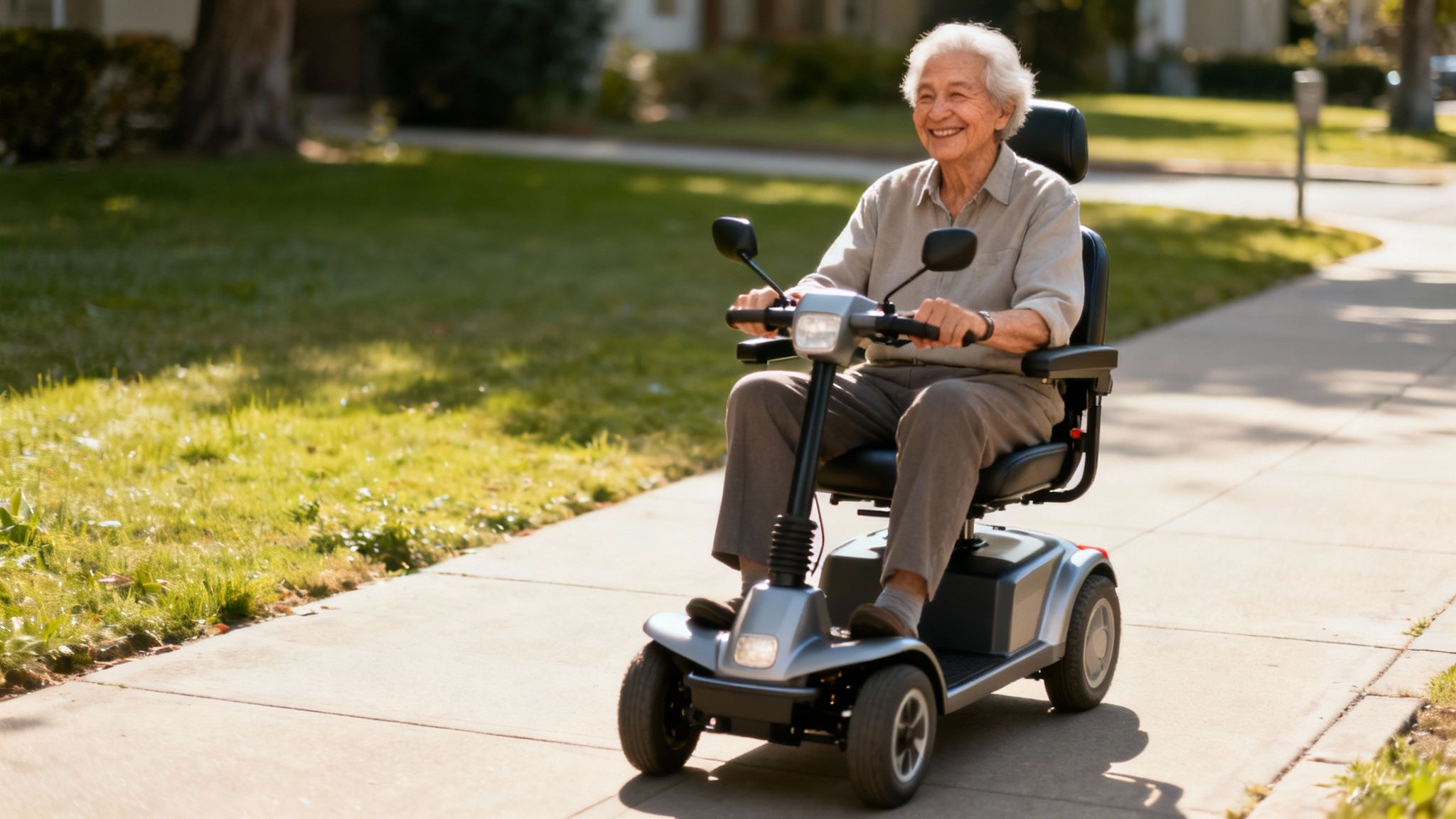
Let's get straight to the point. In most cases, the answer is a simple one: no, you do not need a driver's license to use a standard mobility scooter.
This comes as a surprise to many, but it makes sense when you think about it. In places like the US and the UK, these devices are legally seen as medical aids—much like a power wheelchair—and not as motor vehicles. Their entire purpose is to grant freedom and mobility to those who need it, not to serve as general transportation for everyone.
So, while the quick answer is "no license needed," the devil is in the details. The rules can shift depending on your scooter's top speed, its design, and of course, your local laws. It's really important to know the difference between a medical aid and something like a recreational e-scooter to make sure you're on the right side of the law.
For example, the United Kingdom doesn't require a license, but they do classify scooters. Class 2 scooters are for pavements (sidewalks), while the faster Class 3 models are permitted on roads. This shows how the rules adapt to what the scooter is capable of. To get the specifics, you can always explore the UK's legal framework for mobility aids.
This guide will walk you through these key distinctions so you can ride with confidence, wherever you are.
To give you a quick overview, here’s a table summarizing the general rules for standard mobility scooters in a few key regions.
| Requirement | United States (Federal Guideline) | United Kingdom | General Rule |
|---|---|---|---|
| Driver's License | Not Required | Not Required | Almost Never |
| Registration | Not Required | Required for Class 3 | Varies by Speed/Class |
| Insurance | Not Required (Recommended) | Not Required (Recommended) | Recommended |
This table should make it clear that for the average user with a standard scooter, the requirements are minimal. However, as scooters get faster and more powerful, the rules can change, so it's always smart to check local regulations.
Before we get into specific rules, it's really important to understand why a mobility scooter isn't treated the same as a moped or one of those rental e-scooters you see all over town. It all boils down to one simple thing: its purpose.
At its heart, a mobility scooter is legally classified as a medical device. It's designed specifically to help someone who has trouble getting around on their own.
Think of it this way: a recreational scooter is built for fun, but a mobility scooter fills a medical need, just like a power wheelchair. This is the fundamental reason these devices are almost always exempt from the laws that apply to regular motor vehicles. Our electric wheelchair vs. mobility scooter guide dives deeper into these differences if you're curious.
So, what makes a scooter a "mobility aid" in the eyes of the law? It usually comes down to a few key features that put safety way ahead of speed.
This focus on safety and access isn't just a legal thing; it's what most people expect and support. For example, a UK survey showed that most people were against the idea of forcing users to get a license. You can check out the raw public attitude data on mobility scooter rules for more detail.
Once you grasp this "medical device" classification, it's much easier to understand why you almost certainly won't need a driver's license to use one.
https://www.youtube.com/embed/PjCQm2GVcok
If you're trying to pin down a single, nationwide law for mobility scooters in the United States, you’ll find it’s not that simple. Think of it less like a single rulebook and more like a patchwork quilt of federal guidelines stitched together with local rules.
It all starts at the top with the Americans with Disabilities Act (ADA). This is the big federal law that protects your right to use a mobility device in public spaces, ensuring you can get where you need to go. But the ADA doesn't get into the nitty-gritty of traffic laws—that’s where state and city governments take over.
Every state, and often every city, has its own way of defining these devices, usually based on their speed and power. A slower, three-wheeled scooter that you’d use on a sidewalk is almost always seen as a medical device. For those, you won't need a driver's license.
The key takeaway is this: federal law gives you the right to access, but local laws tell you how to use your scooter out in the world. It’s always a good idea to check your specific city or state ordinances.
This is where the distinction between a "medical" scooter and a "recreational" one becomes so important, as it’s usually the starting point for most local laws.
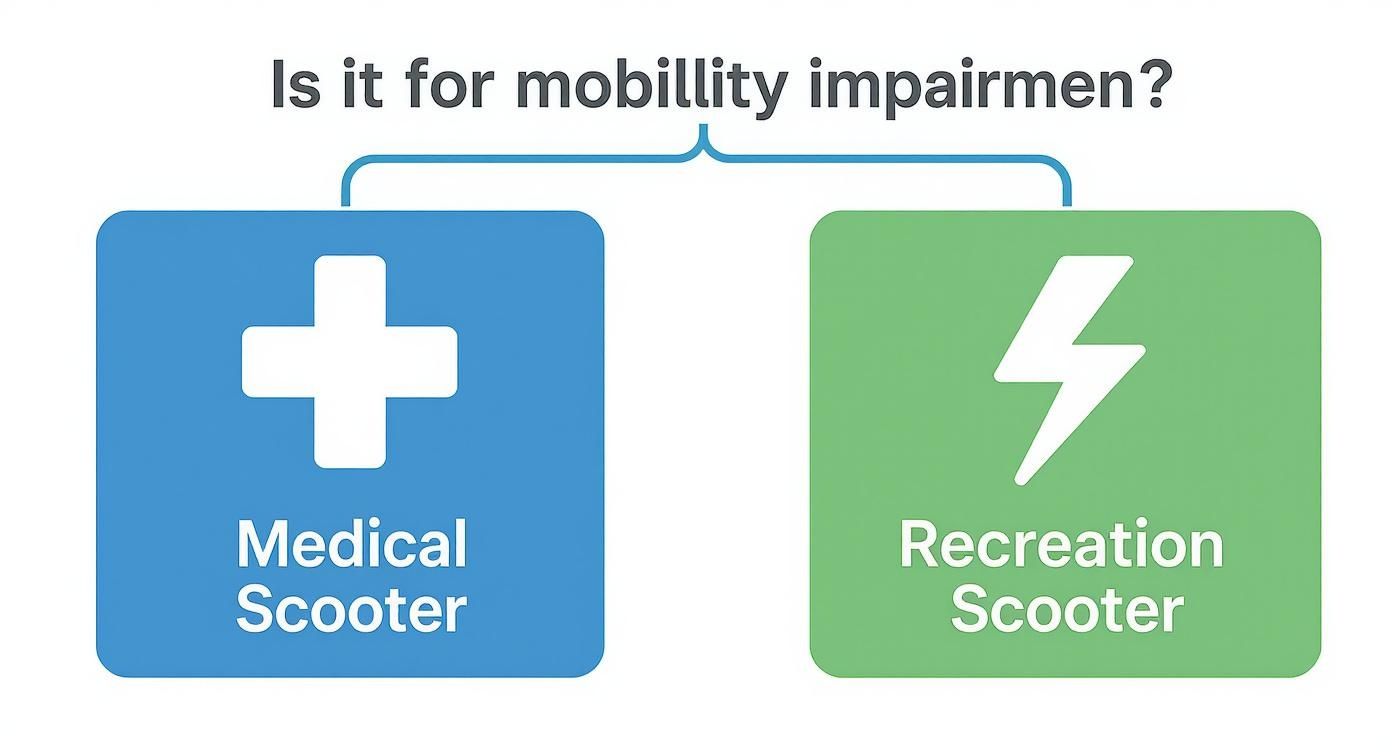
As you can see, the law cares most about the purpose of the device. Is it to help with a mobility impairment, or is it just for fun? That single question is often the biggest factor in how it's classified.
Take California, for example. The rules there hinge on the scooter's specs. If you have an electric scooter with a top speed of 15 mph, a standard driver's license is usually all you need—no special moped permit required. You can get more details on California's scooter license requirements on statelawfirm.com.
But if you get a faster model that can keep up with traffic, it might get reclassified as something else entirely, triggering a whole different set of rules. For some related info, you can check out our guide on whether electric wheelchairs are allowed on the road.
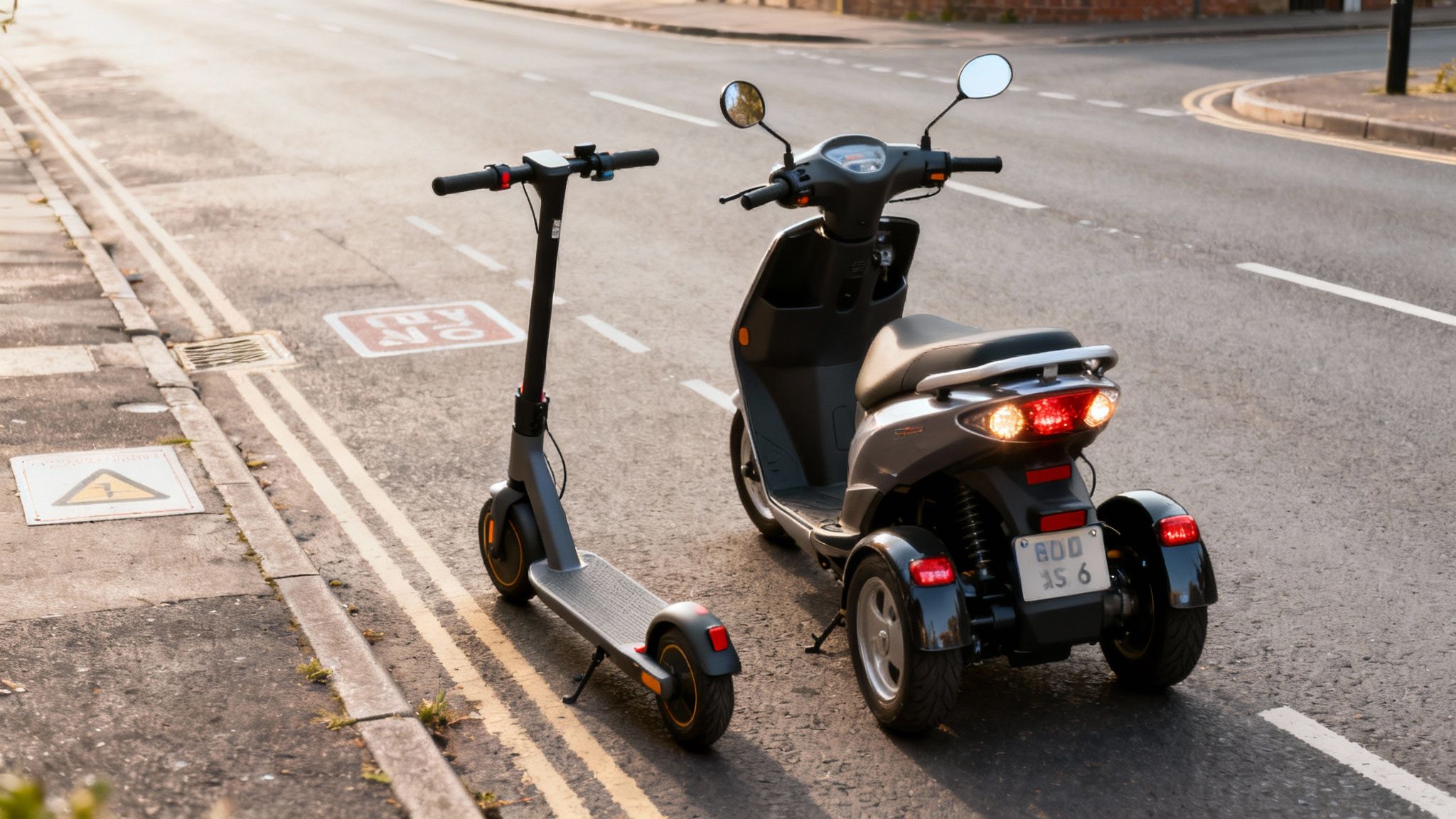
When it comes to mobility scooter laws, the United Kingdom actually has a pretty clear and structured system. It’s a great example of how regulations can work well, striking a smart balance between giving users freedom and keeping everyone safe on public pathways and roads.
Instead of a confusing, one-size-fits-all rule, the UK breaks it down into two main categories. Each has its own set of guidelines, and understanding the difference is key to seeing how these devices are managed.
The UK government separates scooters into two classes based on their power and where they're meant to be used. This tiered approach just makes sense—it ensures the rules for a slower pavement scooter are different from those for a faster, road-capable model.
Here’s the breakdown:
The most important thing to know is that even for the faster, road-legal Class 3 scooters, you do not need a driver's license to operate one. This is a crucial point because it ensures mobility aids remain accessible to everyone who needs them, regardless of their ability to hold a traditional license.
Now, there is one small bit of paperwork for the bigger scooters. Class 3 models must be registered with the Driver and Vehicle Licensing Agency (DVLA), but it's a straightforward process that helps with accountability. This general idea—that true mobility aids shouldn't require a license—is pretty common around the world. Countries like Canada and Australia have similar outlooks.
If you want to dig deeper into the specifics, we cover more about the law and mobility scooters in our detailed guide.
To make things even clearer, here’s a quick comparison of the two UK classes.
| Feature | Class 2 Pavement Scooter | Class 3 Road-Legal Scooter |
|---|---|---|
| Maximum Speed | 4 mph (6 km/h) | 8 mph on roads, 4 mph on pavements |
| Where You Can Ride | Pavements and footpaths only | Can be used on roads and pavements |
| Driver's License | Not required | Not required |
| Vehicle Registration | Not required | Required with the DVLA |
| Required Features | No specific requirements | Must have lights, indicators, horn, and rearview mirror |
| Age Requirement | No minimum age | Must be 14 years or older to operate |
Ultimately, the UK's system shows how common-sense rules can make life easier and safer for everyone. It protects the independence of scooter users while making sure there are clear guidelines for sharing public spaces.
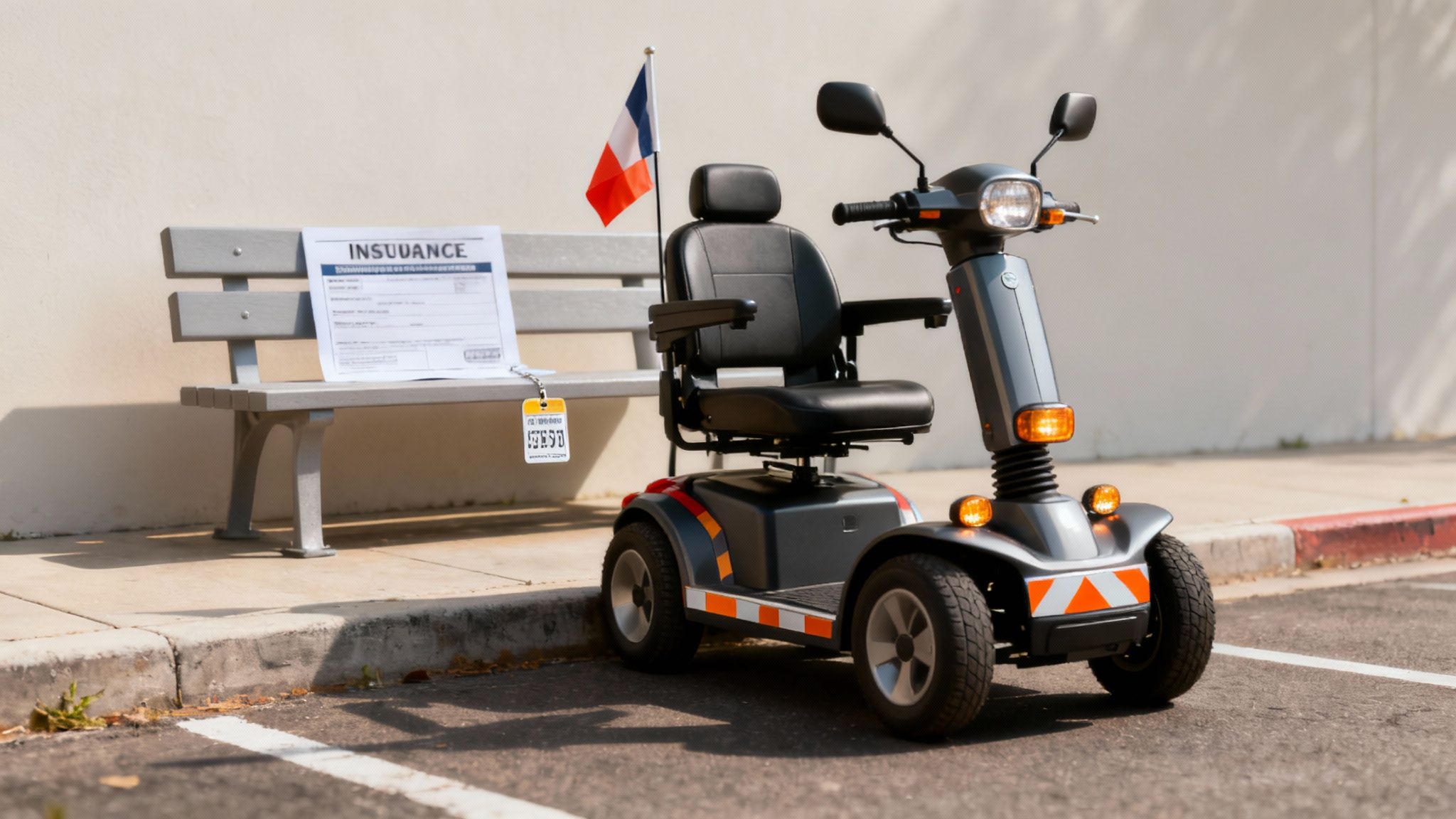
So, you know you don't need a driver's license. That’s a great start, but it's really just the first piece of the puzzle. There are a few other rules of the road that are just as important for keeping you safe and on the right side of the law, starting with registration.
In the US, you almost never have to worry about registering a standard mobility scooter. Things are a bit different in other places, though. Over in the UK, for instance, the zippier Class 3 models actually have to be registered with the government. It’s a straightforward step that adds a layer of accountability without making things complicated for users.
Even though it’s rarely a legal requirement, getting insurance for your scooter is one of the smartest moves you can make. Think of it as a safety net. A good policy protects you from the headache of theft and, more importantly, covers you if you’re ever in an accident. It's worth getting familiar with terms like bodily injury liability coverage to understand how you're protected if someone gets hurt.
Beyond the paperwork, day-to-day riding rules are all about common sense and safety. The big one is knowing where you can ride—stick to sidewalks and crosswalks. Always give pedestrians the right of way, and in busy areas, slow down to a walking pace. It’s also about using the tools you’ve got to stay visible and communicate with others.
Essential Safety Practices:
While not always a legal requirement, having insurance provides peace of mind. To learn more, check out our guide on whether insurance will pay for a mobility scooter.
It's totally normal to have questions when you're figuring out the rules of the road for your new mobility scooter. Let's clear up some of the most common ones we hear from riders.
For the most part, no. Think of your mobility scooter as medical equipment, not a car. Because of that, most places, including the United States, don't require them to have license plates.
The main exception is over in the UK. Their faster Class 3 scooters need to be registered with the DVLA, but even then, they don't get a standard vehicle plate like a car or motorcycle.
You bet. While you don't need a driver's license, you're still sharing space with others and need to follow the local traffic and pedestrian laws.
Doing things like operating under the influence, zipping around recklessly, or taking your scooter on a highway will definitely get you in trouble and could result in a fine. The golden rule is to always give pedestrians the right-of-way on sidewalks and stick to the rules of the road when you're on one.
A mobility scooter gives you incredible freedom, but with that freedom comes a responsibility to ride safely and with respect for others. Following the local rules isn't just about avoiding a ticket—it's about keeping yourself and everyone around you safe.
This is a great question. If your scooter can go faster than the legal speed limit for a mobility device in your area, it could get reclassified as something else entirely, like a moped.
That's a whole different ballgame. A change like that would almost certainly mean you'd need a driver's license, proper registration, and insurance just to operate it legally. It's always best to check your local regulations to make sure your ride fits within the "mobility aid" category.
Ready to find a mobility solution that gives you both freedom and total peace of mind? Take a look at the incredible range of scooters and electric wheelchairs at Electric Wheelchairs USA. We can help you find the perfect model that fits your life and your needs. Check us out at https://www.electricwheelchairsusa.com.


Leave a comment