(800) 682-9444
Call Now


So, can you take your electric wheelchair out on the road? The short answer is yes, but it’s not quite that simple.
In the eyes of the law in the U.S., if you're using an electric wheelchair, you're considered a pedestrian, not a vehicle operator. That’s a crucial distinction. It means your primary turf is the sidewalk. The law, however, is practical—it understands that sidewalks aren't always available, safe, or even there at all.
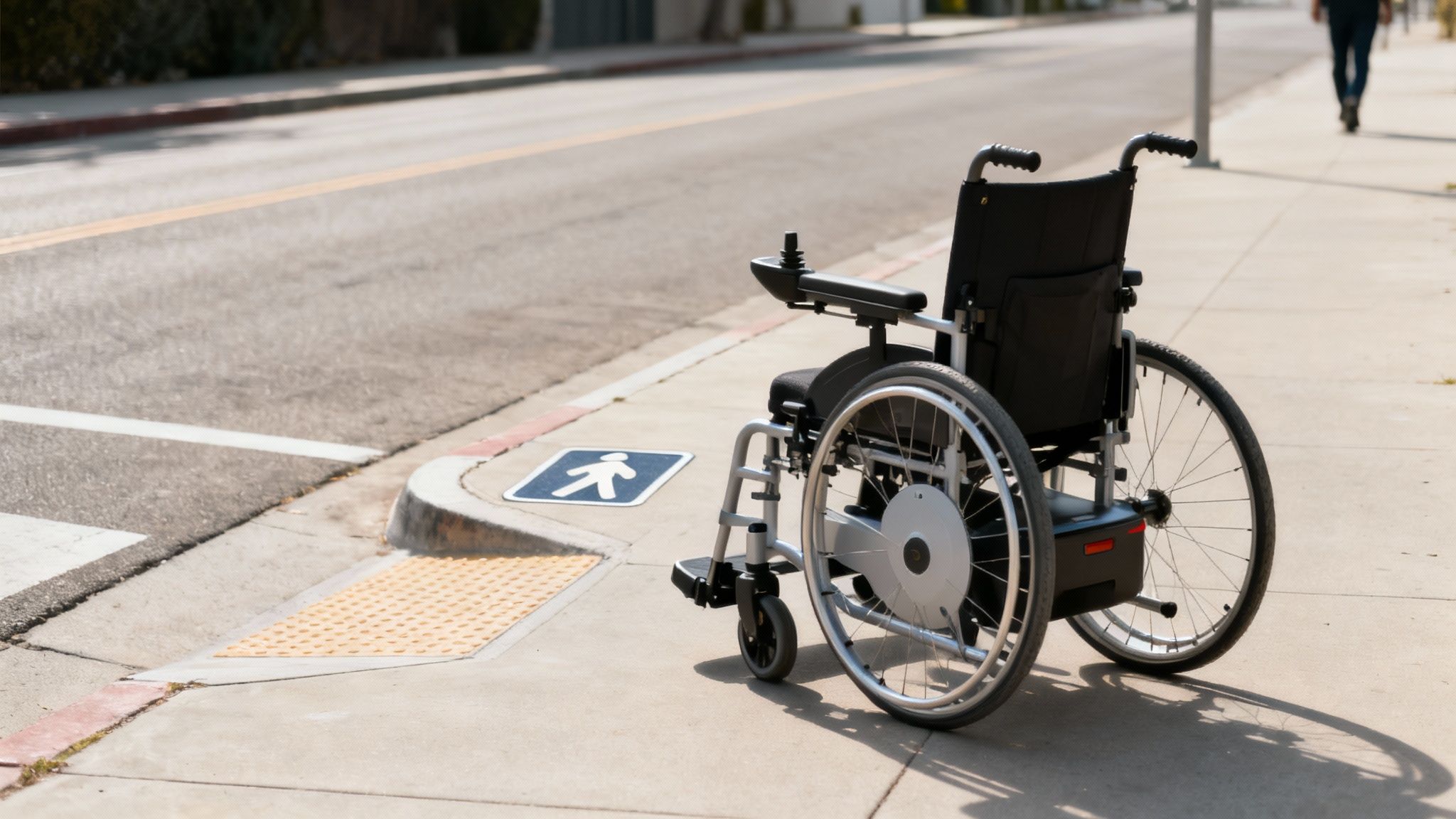
Think of using the road in your wheelchair as a necessary detour. You're generally allowed on the roadway only when a sidewalk is missing, blocked by construction, or just too dangerous to navigate. This isn't just a local quirk; it's a widely accepted standard.
Most countries classify electric wheelchairs as pedestrian devices, and that classification dictates where you can go. The United States is no different, treating users as pedestrians who should stick to sidewalks unless it's impossible. Of course, the specific rules can vary from state to state. You can learn more about these international and state-specific wheelchair laws to get the finer details.
This guide will walk you through exactly when you can take that detour onto the road, what rules to follow when you do, and most importantly, how to stay safe.
To get us started, it helps to see how different mobility devices fit into the traffic puzzle. This quick table breaks down where each one typically belongs.
| Location | Electric Wheelchair (Pedestrian Device) | Mobility Scooter (Varies by Law) | Bicycle / E-Bike (Vehicle) |
|---|---|---|---|
| Sidewalk | Primary location | Generally allowed | Often prohibited |
| Bike Lane | Rarely, check local laws | Rarely, check local laws | Primary location |
| Roadway | Only when sidewalk is unusable | Only when sidewalk is unusable | Primary location |
As you can see, your electric wheelchair is treated very differently from a bicycle, which is considered a vehicle. Knowing this is the first step to navigating your world safely and confidently.
Before we jump into the specific rules of the road, it’s really important to get a handle on why the law sees your electric wheelchair the way it does. Think about it: we have different rules for cars, motorcycles, and bicycles because they're fundamentally different things. The legal system does the same for mobility devices, and that classification is the starting point for everything else.
Here’s the most critical thing to know: your electric wheelchair is almost always legally defined as a medical device or pedestrian aid, not a motor vehicle. This isn’t just semantics; it’s a game-changer. Your chair is designed for a medical need, which is why it has features like lower speeds and a tight turning radius—perfect for navigating indoors and through crowded sidewalks safely. This "pedestrian" status is the key that unlocks all your rights and responsibilities.
While an electric wheelchair’s identity is pretty clear-cut legally, other devices like mobility scooters can sometimes land in a bit of a gray area. If you want to dive deeper into what separates them, check out our detailed guide comparing electric wheelchairs vs. mobility scooters.
Because your chair is seen as an extension of you as a pedestrian, you inherit the rights—and rules—of walking. This means sidewalks are your primary domain, and roads are only an option when sidewalks are unusable.
Understanding this helps explain why you don't need a license plate or vehicle registration. It also has a huge impact on safety and liability. As newer, more advanced models hit the market, it’s a good idea to stay aware of the shifting world of personal injury law concerning high-tech vehicles for a bigger-picture legal view.
At the end of the day, knowing how your chair is classified gives you the power to travel with confidence. You'll know where you belong and how to stand up for your right to move through your community safely.
We've all been there. You're cruising along and suddenly, the sidewalk just... ends. Or it's a crumbled mess, completely blocked by construction, or there's no curb cut to get on or off safely. What do you do?
This is precisely when the law says you can move onto the road. But it's not a free-for-all. The first thing is to be sure the sidewalk is genuinely "unusable." This isn't just a matter of convenience; it means there's a real barrier preventing you from continuing your trip safely.
Once you’ve made that call, moving onto the road needs to be done with incredible care. Your safety, and the safety of drivers, is the absolute top priority. You'll need to stay as far to the shoulder as you possibly can, giving cars plenty of room to pass.
This is where it gets a little tricky, and it's one of the biggest questions people have: should you travel with or against the flow of traffic?
Most states will have you operate your chair just like a bicyclist, meaning you travel with the flow of traffic. A few, however, want you to act like a pedestrian walking on the shoulder, moving against traffic.
Key Takeaway: The rule for which direction to travel isn't the same everywhere. This is one of the most critical local laws to check. Getting it wrong is not only dangerous but could also get you a ticket.
This all comes down to how your device is legally classified. Because you're using it for mobility, you're considered a pedestrian, not a vehicle.
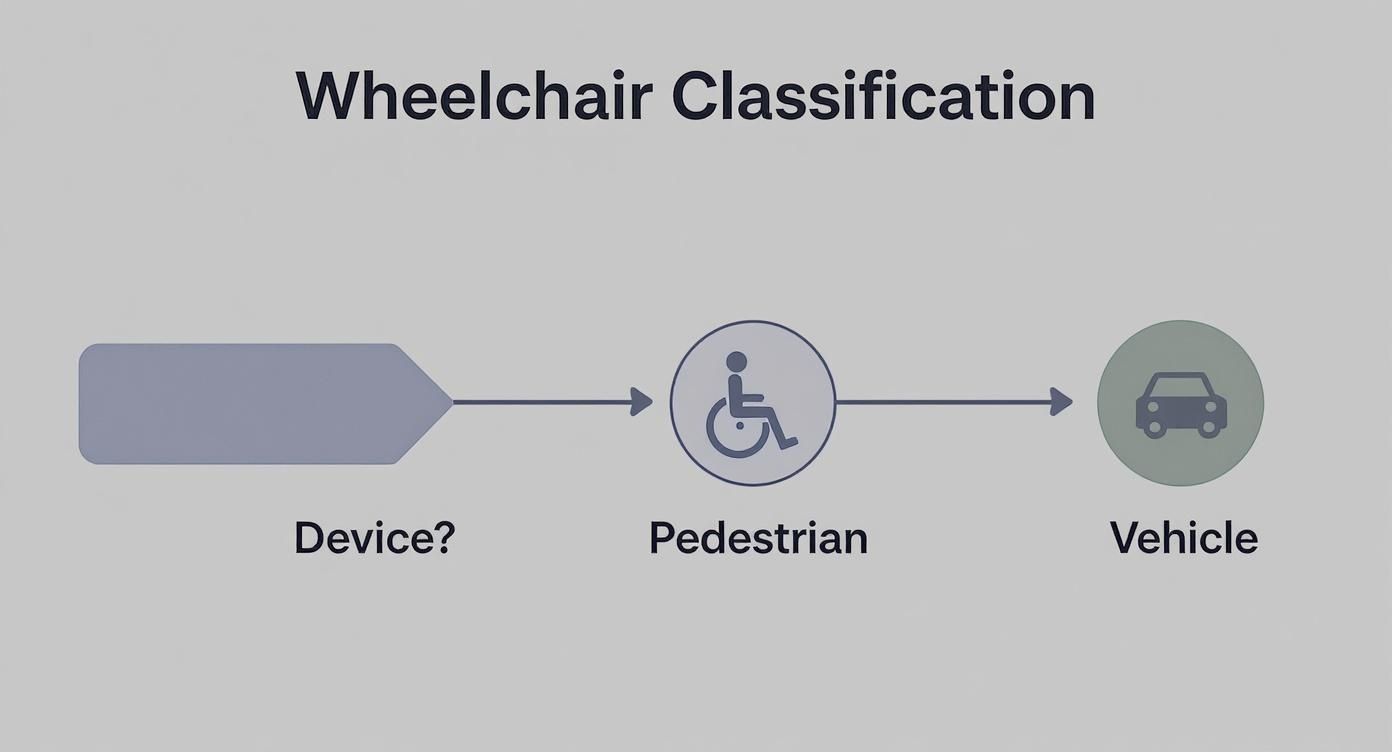
As you can see, because an electric wheelchair is a medical necessity, you follow pedestrian rules. This also means you need to stick to streets with lower speed limits. Highways and busy main roads are always off-limits. And don't forget to use clear hand signals for turns—communicating your next move to drivers is one of the smartest things you can do.
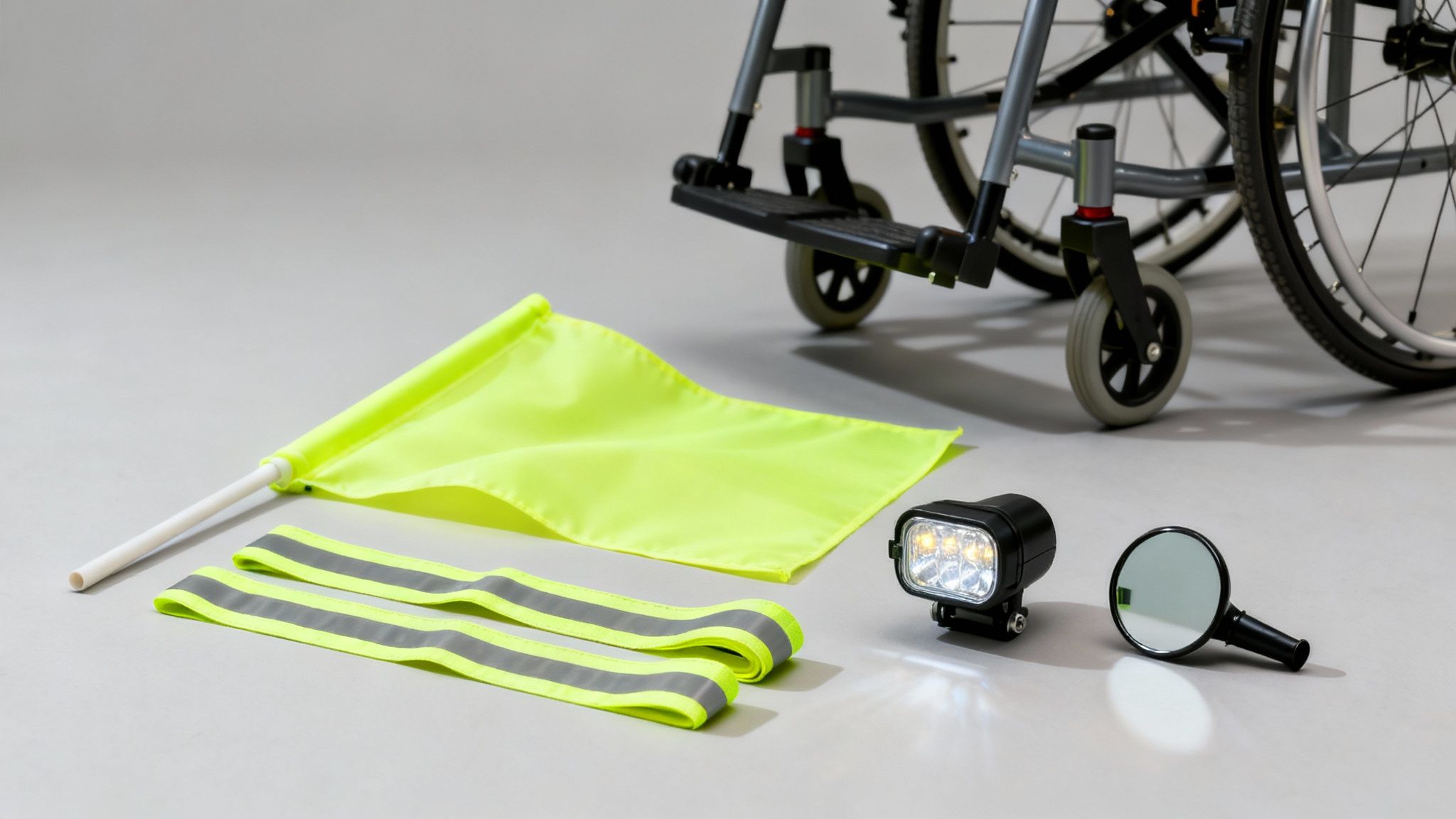
Let’s be honest: sharing space with two-ton vehicles means you have to make yourself impossible to miss. When you find yourself needing to use the road, even for a short stretch, outfitting your electric wheelchair with the right safety gear isn’t just a recommendation—it’s absolutely vital for your protection and peace of mind.
I like to break it down into two simple categories: gear that helps you be seen, and gear that helps you stay aware. Think of each piece as a small investment that pays you back tenfold in confidence and safety whenever you’re near traffic.
Your number one job is to be visible from every single angle, whether it's high noon or late at night. Drivers are conditioned to look for other cars, not for the lower profile of a wheelchair. Your goal is to break that pattern and stand out.
Here are the non-negotiables for boosting your visibility:
Your visibility is your first line of defense. The more lights and reflective surfaces you have, the more time a driver has to react safely and give you the space you need.
Of course, visibility is a two-way street. Just as critical as being seen is your ability to see and hear what’s going on all around you. Good situational awareness is what helps you anticipate what others are going to do before they do it.
Consider adding these tools to your setup to stay alert:
While federal and state laws give us the big picture, the rules that really matter for your daily trips are usually decided right in your own city or county. Getting a handle on these local ordinances is the key to riding with confidence and staying safe.
Think of it this way: federal law is like getting your driver's license—it gives you the right to be on the road. But it's the local law that posts the specific speed limit on your street.
So, where do you find these rules? The good news is, it's probably easier than you think. Your first stop should be the website for your local or state’s Department of Transportation (DOT).
When you're searching, be direct. You'll get the best results by using simple phrases like:
If your search leads you to the Americans with Disabilities Act (ADA) website, that's a great resource too. The ADA site provides the high-level federal protections that guarantee your right to access public spaces, which is the foundation all local laws must build upon.
What if your online search comes up empty? Don't be afraid to pick up the phone. A quick call to your local police department's non-emergency line or the city clerk's office can often get you a clear, straight answer in minutes.
Disability advocacy groups in your area are another fantastic resource; they live and breathe this stuff and are often experts on local accessibility rules. It can also help to understand how similar devices are classified. You can learn a lot by reading about the specific laws for mobility scooters, as their regulations sometimes overlap with power wheelchairs.
Key Takeaway: Knowing the local rules isn't just about avoiding a ticket—it's about empowerment. It gives you the confidence to advocate for your right to travel and helps you make the safest possible choices when you have to share the road.
Let's clear up some common confusion around the paperwork for your electric wheelchair. The good news is, it’s simpler than you might think. Because your power chair is legally seen as a medical device, you do not need a driver's license, license plate, or vehicle registration to use it.
Think of your chair as an extension of you as a pedestrian, not as a separate vehicle that needs state paperwork. While resources on understanding motor vehicle registration and proof of insurance requirements are made for cars, they really highlight how different the rules are for mobility devices. This key distinction is what keeps things straightforward for you.
Just because you don't need car insurance doesn't mean you should skip insurance altogether. That could be a costly mistake. Many standard homeowner's or renter's policies actually include liability protection that could cover you if you're involved in an accident with someone else. It's definitely worth digging into your policy details to see exactly what's covered.
Beyond that, your power chair is a valuable piece of equipment. With the electric wheelchair market expected to hit USD 9.05 billion by 2030, these devices are a significant investment. You can check out more stats on this growing global market at Grandview Research.
Protecting your chair from theft or damage is just as important as knowing the rules of the road. Many insurance providers offer a separate rider or a specific policy just for durable medical equipment. To really get a handle on your options, take a look at our guide on how insurance can pay for an electric wheelchair. This will help make sure you're not just physically safe, but financially protected, too.
Of course, even when you know the general rules, real-world situations pop up that can leave you scratching your head. Let's tackle some of the most common questions we hear about using an electric wheelchair on or near the road.
This is a big one, and the honest answer is: it really depends on where you live.
In a lot of cities, bike lanes are strictly for, well, bikes. Since your wheelchair is legally considered a pedestrian device, you might not be allowed in them. However, more and more communities are starting to allow mobility devices in bike lanes, realizing it's often a safer alternative to a bumpy, inaccessible sidewalk. The only way to know for sure is to check your local city or county transportation rules before you head out.
From a legal standpoint, you're almost never required to wear a helmet. The laws that apply to cyclists just don't apply to wheelchair users.
That said, from a safety standpoint? We strongly recommend it. Anytime you're sharing space with cars, a helmet is a simple piece of gear that can make a world of difference in a fall or accident. Think of it as cheap insurance.
First things first, stay calm and be polite. Most of the time, the officer just wants to understand the situation.
Clearly explain that you're using the road because the sidewalk is either blocked, unsafe, or simply not there. It's often helpful to mention your rights as a pedestrian under the Americans with Disabilities Act (ADA), which grants you access when the designated pedestrian path is unusable.
For mobility solutions that give you the freedom to navigate your world safely and confidently, Electric Wheelchairs USA has a curated selection of chairs and accessories to fit your needs. https://www.electricwheelchairsusa.com


Leave a comment