(800) 682-9444
Call Now


Choosing the right wheelchair ramp for your home is a huge step in making it a safe, accessible, and welcoming space. It’s all about matching the right kind of ramp—whether it's portable, a simple threshold ramp, modular, or a custom-built solution—to your home’s layout, your budget, and the user's day-to-day life.
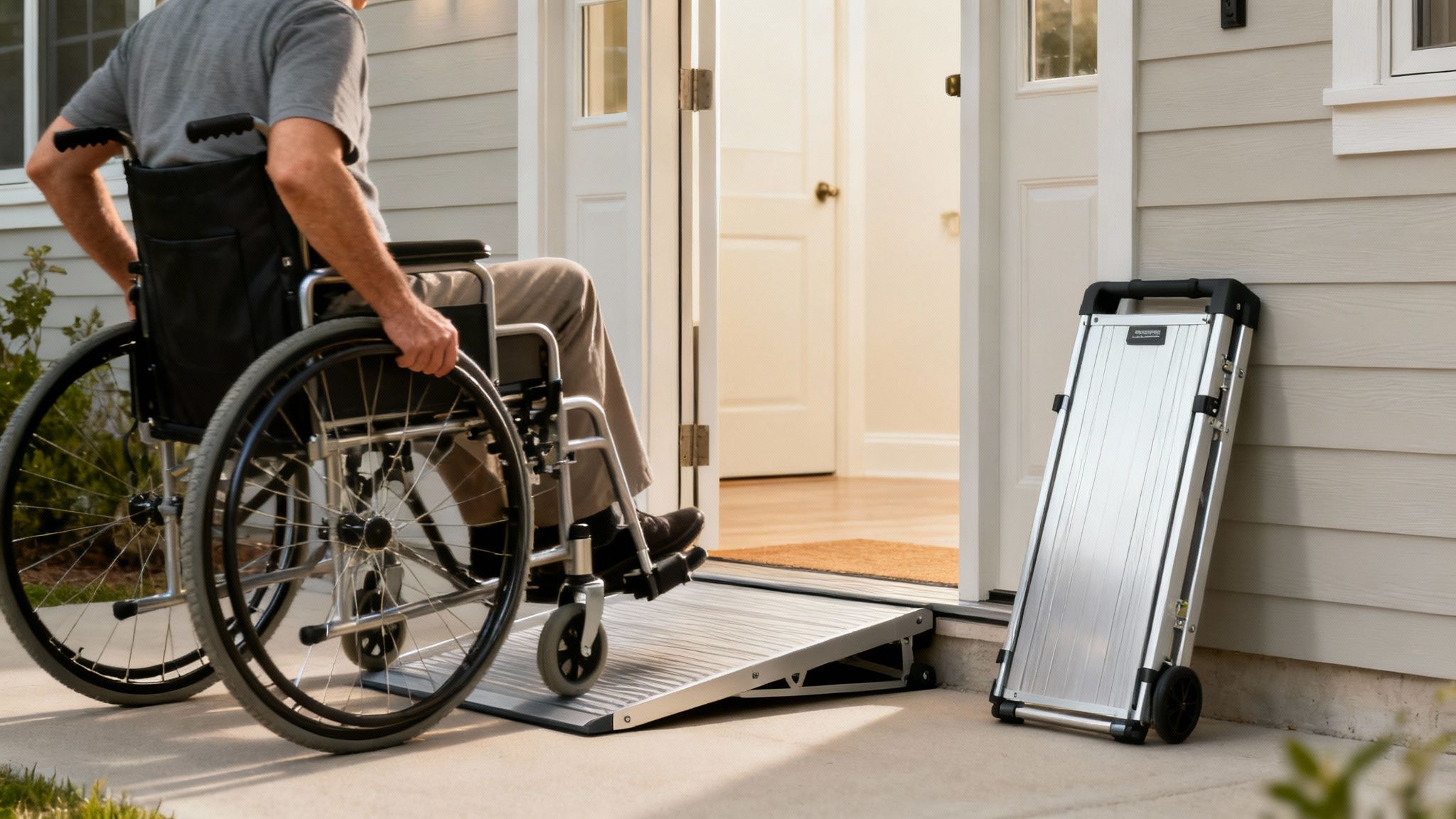
This decision can feel a little overwhelming at first, but it really boils down to one simple question: what’s your primary goal? Are you looking for a permanent, sturdy solution for the main entrance, or do you need a temporary, lightweight option for a visiting family member? Your answer will point you in the right direction.
You're not alone in looking for these solutions. The global demand for wheelchair ramps is growing fast, with the market expected to hit over $4.7 billion by 2031. This isn't just a number; it reflects a major shift toward independent living and disability rights.
To make your decision easier, let's break down the four main types of wheelchair ramps. Each one serves a different purpose and has its own set of pros and cons when it comes to installation, materials, and cost.
Think of these as the "grab-and-go" option. They’re lightweight, foldable ramps that are perfect for getting over a few steps or for loading a wheelchair into a van. No installation is required, which makes them ideal for temporary situations or travel.
These small but mighty ramps are designed specifically for those little bumps in life—like doorways, thresholds, and sliding glass door tracks. They’re absolutely essential for creating smooth, trip-free transitions from one room to another. A great example is this high-quality PVI threshold ramp.
Modular ramps, usually made from interlocking aluminum sections, are a fantastic semi-permanent solution. They're incredibly durable, won't rust, and have the flexibility to be reconfigured or even moved to a new home if your needs change down the road.
Often made of wood or concrete, these are permanent structures designed to blend seamlessly with your home's style. If you’re looking for something that feels like it was always part of your home's design, a custom-built ramp is the way to go.
To help you see the differences at a glance, here’s a simple breakdown of the four main ramp types.
| Ramp Type | Best For | Installation | Portability | Typical Cost |
|---|---|---|---|---|
| Portable | Temporary use, travel, overcoming 1-3 steps | None needed | High | $50 - $600 |
| Threshold | Doorways, sliding door tracks, small rises | Simple, often no tools needed | High | $40 - $250 |
| Modular | Semi-permanent needs, reconfigurable layouts | Professional or DIY | Medium (can be disassembled) | $1,000 - $5,000+ |
| Custom-Built | Permanent, long-term accessibility, aesthetic integration | Professional construction | Low (permanent) | $1,500 - $8,000+ |
This table should give you a good starting point for figuring out which direction to head in based on your immediate needs and long-term plans.
A well-chosen ramp does more than just provide access; it restores a sense of independence and freedom within one's own home. The goal is to find a solution that feels like a natural part of the environment, not an afterthought.
It’s also worth noting that if you're in the planning stages of a new build or major renovation, incorporating accessible house plans for elderly people from the very beginning can create a living space that’s truly integrated and barrier-free.
Once you’ve figured out which type of ramp you need, the next big decision is the material it’s made from. This choice is about more than just looks; it plays a huge role in the ramp’s safety, how much maintenance it’ll need, and how well it stands up to your local weather.
If you live somewhere with a lot of rain or snow, aluminum ramps are often the way to go. They’re lightweight, completely rust-proof, and you can pretty much just set them up and forget about them. Aluminum won’t warp or rot from constant moisture like wood can, making it a super reliable choice for year-round access.
But what if you want something that blends in perfectly with your home? A custom-built wood ramp can be a beautiful choice. You could use pressure-treated wood to match an existing deck, creating a seamless, integrated look. Just know that this beauty comes with a bit of homework—wood needs to be sealed or stained every year to keep it protected from the elements and prevent decay.
Beyond the material itself, a few key design features are absolutely critical for keeping everyone safe.
When it comes to the best wheelchair ramps for your home, safety features aren't just nice add-ons; they should be built right into the design. A high-traction surface is a fundamental part of a secure, dependable ramp.
For anyone leaning towards a portable or modular ramp, you'll notice the best ones really nail these safety designs. You can see some great examples in action in our guide on the best mobility scooter ramps.
At the end of the day, getting the right mix of material and design ensures your ramp is not only easy to use but safe for many years to come.
Getting the slope and length of your ramp right is probably the single most important part of the entire project. If you mess this up, you don't just get a ramp that's hard to use—you create a genuine safety hazard. A ramp that’s too steep can easily lead to tipping or a dangerous loss of control.
The gold standard comes from the Americans with Disabilities Act (ADA), which recommends a 1:12 slope ratio. While this is mandatory for public spaces, it's an excellent guideline to follow for your home.
So, what does that actually mean? It’s pretty simple: for every 1 inch of vertical height you need to overcome (the "rise"), you need 12 inches (or one foot) of ramp length. This ratio creates a gentle, safe incline that's manageable for most users.
First things first, you need to measure your total vertical rise. Grab a tape measure and find the distance from the ground level straight up to the surface of the porch, doorway, or wherever the ramp needs to end. Be precise here—even an inch can make a difference.
Let's walk through a common example. Say your front porch is 30 inches off the ground.
A lot of homeowners are surprised by how much space a truly safe ramp actually takes up. A 30-foot ramp isn't a small structure; it requires a significant amount of yard space and might even need turns and landings, which you'll also have to factor into your plans.
This is where you can see the interplay between your material choice, the space you have available, and the user's safety. It all starts with that one simple measurement.

This visual guide breaks down the process, from comparing your options to choosing the right one and getting it installed. Ultimately, the best material and final design all hinge on the length and layout you determine from your slope calculation. Taking accurate measurements is the foundation for everything that follows, influencing safety, usability, and your final cost.
And since we're on the topic of measurements, getting the ramp right is only half the battle. Make sure you also check out our article on the key measurements to determine the best wheelchair fit—it’s the perfect companion piece to planning your home's accessibility.
https://www.youtube.com/embed/o7dqeGLkpt0
You’ve got your ramp picked out and a solid plan in place. Now for the exciting part: making it a reality. How you tackle the installation really boils down to the type of ramp you’ve chosen. A small threshold ramp, for instance, is usually a simple DIY job you can knock out in an afternoon.
But when you get into larger modular systems or permanent, custom-built wheelchair ramps for home, it’s a whole different ballgame. For these, I always recommend bringing in a certified professional or a licensed contractor. It’s the only way to guarantee the ramp is structurally sound, meets all the safety standards, and is truly built to last. When you're talking to potential installers, don't be shy—ask to see their insurance, look at a portfolio of similar accessibility projects, and always check their references.
Before you even think about picking up a hammer, you need to make a call to your local building department. This is a step people often miss, and it can be a costly one. Many homeowners are shocked to find out that permanent ramps almost always require a building permit.
Cities and towns have their own specific rules dictating everything from landing sizes and handrail height to the precise slope, even on private property. It's not uncommon for a code to require a 5x5 foot landing at the top of any ramp, for example. Your Homeowners Association (HOA) might have its own set of aesthetic rules, too.
Skipping the step of checking local building codes or HOA rules can be a nightmare. It can lead to hefty fines and the heartbreaking task of tearing down a brand-new ramp just to rebuild it correctly. A quick phone call will save you a world of trouble.
Getting a handle on these local regulations is a critical part of the planning process. This general homeowner's guide to obtaining renovation permits is a great resource for understanding what that process typically looks like.
This kind of forward-thinking is more important than ever. The number of people aged 60 and over is projected to hit 2 billion by 2050, and in the U.S. alone, about 41 million people are living with a mobility disability. These numbers really highlight why getting home accessibility right is so vital. You can explore more of our comprehensive home accessibility solutions to create a safer, more independent living space.
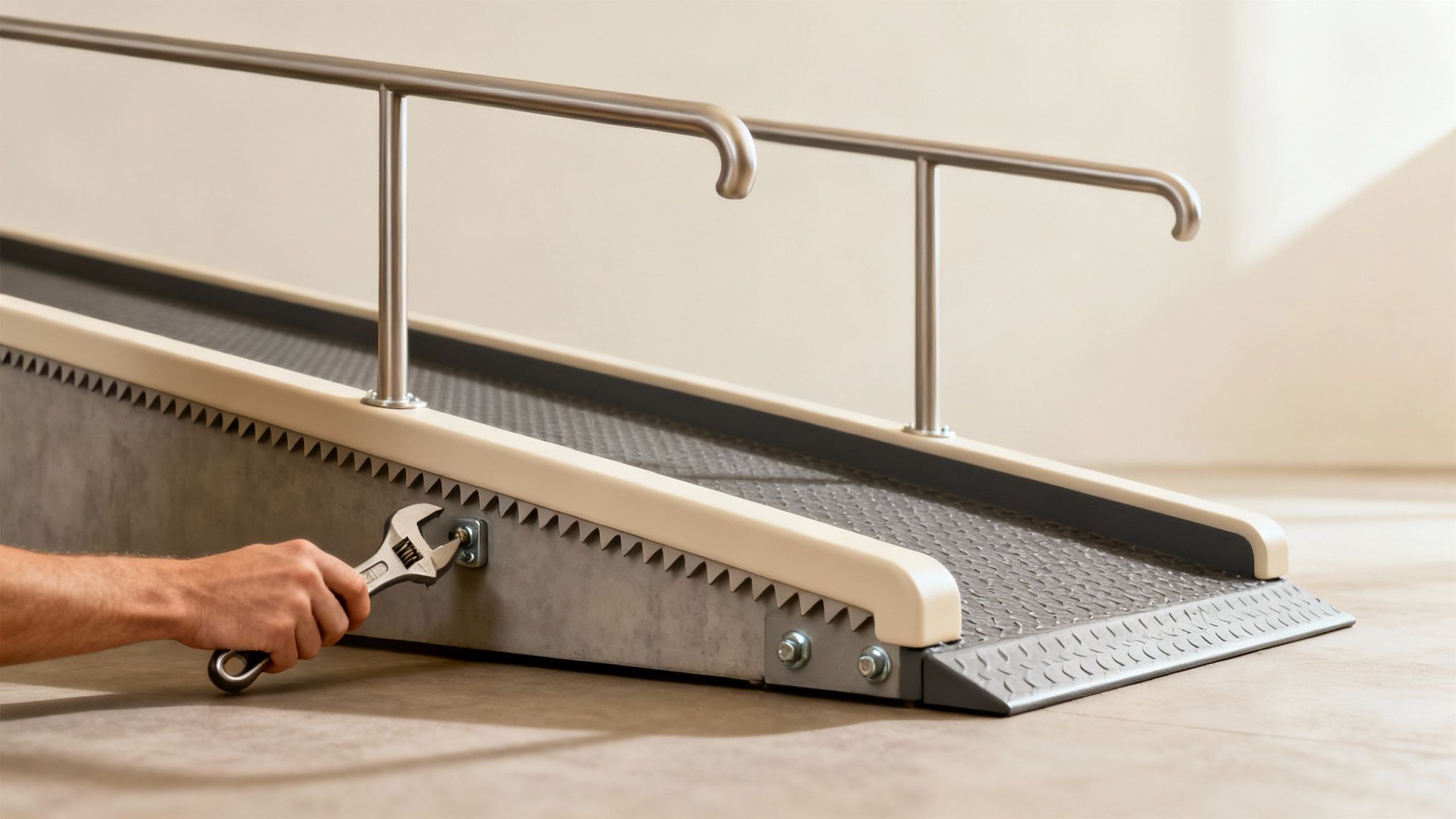
Putting in a ramp is the first step, but ensuring it's genuinely safe day in and day out comes down to smart features and a little bit of upkeep. It's best to think of your ramp not just as a sloped surface, but as a complete system where every piece is designed to keep the user protected.
When it comes to wheelchair ramps for home, there are a couple of features I consider non-negotiable. First, any ramp with a bit of a rise needs continuous handrails on both sides. They’re absolutely vital for stability, not just for the person in the chair but for anyone lending a hand. Second, you've got to have raised edge guards (or curbs). This simple feature is a lifesaver, preventing wheels from slipping off the side and turning a minor wobble into a serious accident.
A safe ramp isn't an accident. It's the result of thoughtful design that anticipates potential hazards and builds in protection from day one, from a grippy surface to sturdy handrails.
A little proactive care goes a long way in keeping your ramp safe and reliable for the long haul. A quick walk-around each season is usually all it takes to catch small issues before they snowball.
Okay, once you start digging into the details of getting a wheelchair ramp for your home, a few common questions always seem to pop up. Let's tackle them head-on so you can feel confident you're making the right call for your family.
This is the big one, and the honest answer is: it varies—a lot. The final price tag really depends on the ramp's type, material, and size.
A simple, portable threshold ramp to get over a single step or doorway is your most budget-friendly option, usually running between $50 and $200.
If you need something more substantial, like a modular aluminum ramp, you can expect to pay around $100 to $250 per linear foot. So, for a typical 20-foot system, you’re looking at a range of $2,000 to $5,000, and that usually includes professional installation.
The biggest investment is a custom-built, permanent ramp made of wood or concrete. These are tailored to your home's specific layout. Depending on how complex the design is, the materials you choose, and local labor costs, these can range anywhere from $5,000 to $15,000 or even more.
It's a common question, but Medicare Part B generally doesn't cover wheelchair ramps because they're considered home modifications. However, some Medicare Advantage (Part C) plans might offer benefits that do. It’s more common to find financial help through state-level Medicaid waiver programs or non-profits that focus on home accessibility.
Absolutely! Renting is a fantastic, cost-effective solution for short-term needs. Maybe you're recovering from surgery or have a relative coming to visit for a few weeks or months. In situations like that, many durable medical equipment (DME) companies rent out modular aluminum ramp systems. It’s a great way to get a safe, professionally installed ramp without the long-term commitment of buying one.
This one really depends on where you live and what kind of ramp you're installing.
For small, portable ramps that don’t actually attach to or change your home's structure, you almost never need a permit. Just set it down and you're good to go.
However, once you get into permanent structures or larger modular systems, permits are often required. Your local building codes will have very specific rules about the ramp’s slope, width, landings, and handrails that you have to follow. Before you start any installation, always check with your local municipal building department and your HOA. A quick call upfront can save you from potential fines or having to tear down and rebuild your work.
Here at Electric Wheelchairs USA, we get that finding the right mobility solution is a journey, not just a purchase. Take a look at our wide selection of high-quality ramps and accessories to make your home safer and more accessible. Visit https://www.electricwheelchairsusa.com to find the perfect fit today.


Leave a comment