(800) 682-9444
Call Now


An electric wheelchair ramp is so much more than a simple piece of metal or wood; it's your bridge to freedom. It turns what was once an impossible set of stairs into a smooth, accessible path, giving you the power to move through your home and community with a whole new level of confidence. Picking the right ramp isn't a small decision—it directly impacts your safety and how you live your life every single day.
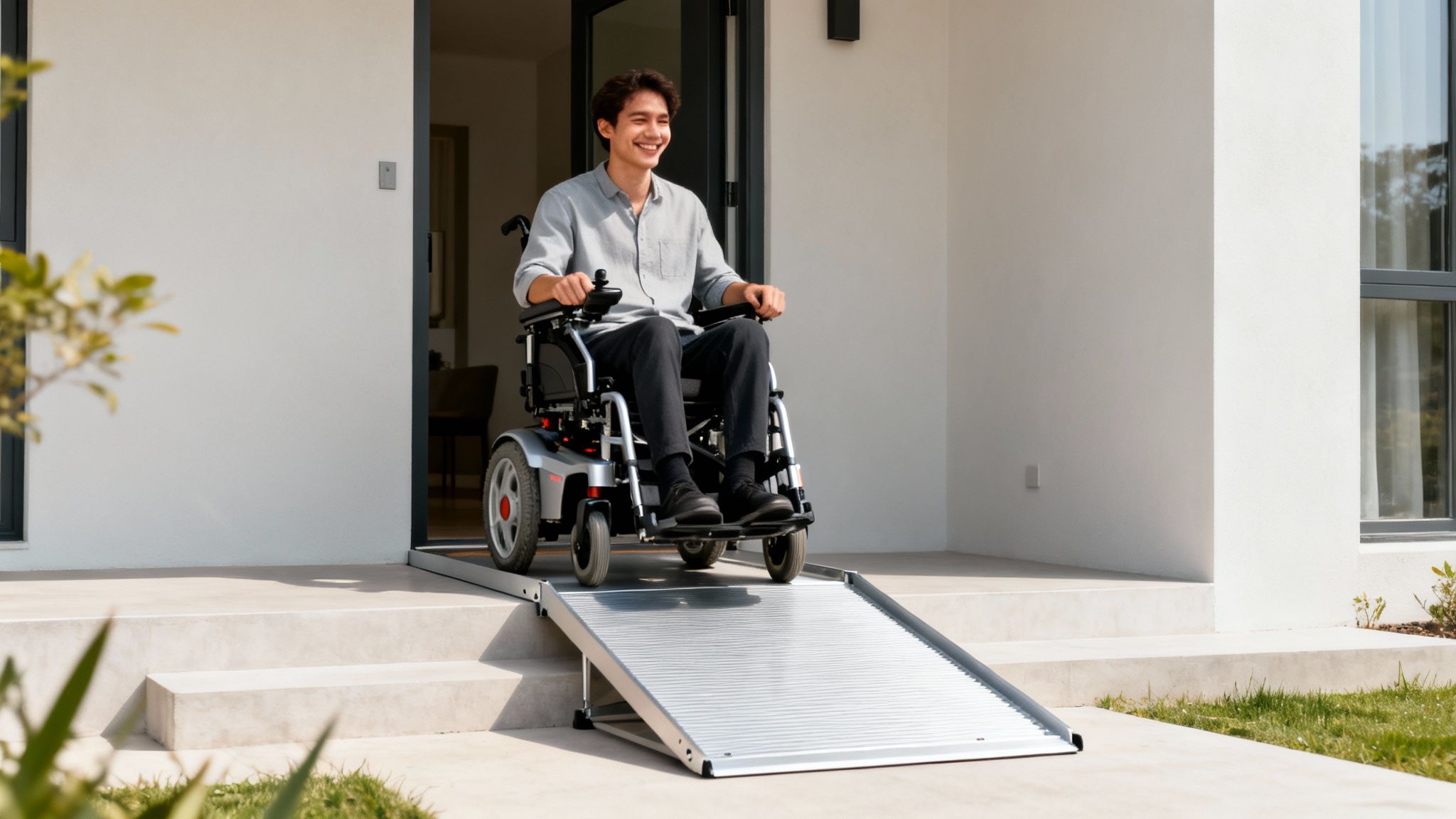
Looking up at a flight of stairs when you're in a power chair can feel like staring at a wall. An electric wheelchair ramp completely changes that picture, breaking down that barrier and giving you back true independence to get to the places you love. Think of this guide as your personal map, designed to cut through all the confusing technical talk and get straight to the practical side of choosing a ramp.
We’re going to zero in on what really matters. You'll see why a single measurement can mean the difference between a safe path and a serious risk. We'll also look at how different ramp types work in the real world, whether it's for a quick trip to the mailbox or for visiting family and friends. This is a conversation with an expert who’s here to help you find a solution that genuinely restores your freedom.
A well-chosen ramp is a real investment in your lifestyle. It’s not just about getting in and out of your house; it's about getting back your spontaneity and being in control of your own day. The whole point is to live life on your terms, and having the right equipment is what makes that a reality.
Here are the key benefits you'll get from finding that perfect ramp:
Putting in an electric wheelchair ramp is a huge first step toward making your living space truly accessible. It often ends up being the cornerstone of a much bigger plan to create a home that works for you, not against you. A lot of people find that once that main barrier—the stairs—is gone, they start seeing all sorts of other ways to make their home even better.
For anyone wanting to go beyond just a ramp, it’s worth looking into the broader universal design principles. This approach can help you create a home that’s truly inclusive for everyone.
This guide will give you the confidence you need to choose the perfect ramp for your specific electric wheelchair and your life. Whether you just need a simple threshold ramp for a small bump or a more complex system for a tall staircase, our goal is to give you clear, straightforward information. To get an idea of the possibilities, you can explore a wide variety of wheelchair ramps for home use that are designed for all sorts of needs and entryways.
Picking out the right electric wheelchair ramp is a lot like choosing the right key for a lock—the one that works is the one that fits your exact situation. The world of ramps really boils down to two main camps: portable ramps for flexibility on the move, and permanent ramps for solid, everyday access at home. Getting a feel for the core differences is the first step to making a choice you'll be happy with.
Portable ramps are the Swiss Army knives of the accessibility world. They’re made to be picked up, set down, and moved around as needed, which is perfect for tackling a few steps at a friend's house or getting your electric wheelchair into a van. Their biggest advantage is their sheer adaptability.
On the other hand, permanent ramps are a fixed, integrated part of your home. They create a seamless and totally reliable path you can use every single day, no setup required. If you're looking for a solution for your main entrance, this is the way to go for maximum safety and convenience.
Think of a portable electric wheelchair ramp as your ticket to spontaneity. These ramps are usually built from lightweight but seriously strong aluminum, designed to fold up and be carried along for the ride. Their main job is to act as a temporary bridge over things like curbs, single steps, or the threshold of an accessible van or SUV.
But don't let "portable" fool you into thinking they're flimsy. The global wheelchair ramp market has shot past USD 2.5 billion, a huge chunk of which is driven by demand for these versatile options. Top-quality portable aluminum models are a crowd favorite because they can often support up to 800 lbs, making them a secure choice even for heavier bariatric electric wheelchairs. You can get a better sense of these trends from this detailed wheelchair ramp market report.
A perfect example is a multi-fold ramp, which collapses down into a compact, suitcase-like shape. This clever design makes it a breeze to store in a car trunk or a closet. For anyone who travels often or visits places where you just don't know what to expect accessibility-wise, a portable ramp is an absolute must-have. You can see one in action by checking out popular models like this PVI Multi-Fold Ramp.
When you need a rock-solid, dependable solution for the entrance you use every day, a permanent ramp is the undisputed champ. These are professionally installed fixtures, often built from aluminum, treated wood, or even concrete. Unlike portable options, they are anchored securely to both the ground and your home, so you never have to worry about them shifting or slipping.
The biggest draws for a permanent ramp are safety and durability. They are built to stand up to years of sun, rain, and snow, as well as constant daily use. More importantly, permanent installations almost always come with critical safety features that most portable ones simply can't offer.
Key features you'll typically find on permanent ramps include:
A permanent ramp isn't just an add-on; it becomes a seamless part of your home's design. It gives you the peace of mind that a safe, stable path is always ready and waiting for you.
Beyond the two main categories, you'll find a couple of specialized ramps designed to tackle very specific, common barriers with pinpoint accuracy.
Modular Ramps are like the building blocks of accessibility. They’re made from interlocking aluminum sections that can be configured to fit almost any space, no matter how tricky. This makes them a fantastic semi-permanent solution for complex entryways that might have turns or an unusual height. You get the sturdiness of a permanent ramp with the flexibility to disassemble and move it later if you need to.
Threshold Ramps are small but mighty. These are little wedges designed to create a smooth transition over a single, small obstacle—think of a raised door jamb or the track of a sliding glass door. They’re often only an inch or two high, but they make all the difference in preventing your electric wheelchair's front wheels from getting stuck.
To help you see how these options stack up, here’s a quick guide to the most common ramp types.
| Ramp Type | Best For | Common Materials | Portability Level |
|---|---|---|---|
| Portable | Travel, vehicle access, temporary needs | Aluminum, Fiberglass | High |
| Permanent | Daily home access, primary entrances | Aluminum, Wood, Concrete | None |
| Modular | Complex entryways, semi-permanent needs | Aluminum | Semi-Permanent |
| Threshold | Doorways, small single rises | Aluminum, Rubber | High |
Ultimately, whether you choose a portable ramp for freedom on the go or a permanent ramp for unwavering reliability at home, the goal is the same: to create a safe and easy path forward.
Picking out a ramp without measuring first? That's a bit like buying a suit without knowing your size—you might get lucky, but chances are it just won't work. Getting the measurements right isn't just a technical step; it's the single most important thing you can do to make sure your ramp is safe, functional, and genuinely helpful.
We're going to walk through a few simple but crucial concepts. Don't worry, there’s no heavy-duty math here. Just some straightforward steps to guarantee a perfect fit for both your electric wheelchair and your home.
Before you do anything else, you need to figure out your rise. The rise is simply the total vertical height from the ground up to the surface where the ramp will end, like your porch or doorway. Think of it as the height of the hill you need to climb.
Here’s how to measure it accurately:
This measurement is the foundation for everything else. Being off by even an inch or two can throw off the entire setup, affecting the length you need and, most importantly, the safety of the ramp.
A common mistake is measuring each individual step and adding them up. This can easily lead to errors. For the best result, always take one single measurement from the top landing straight down to the ground.
Got your rise? Great. Now it's time to figure out how long your ramp needs to be. This is all about the slope—how steep the ramp is. A gentle, gradual slope is always the safest and easiest to manage, while a steep one is a serious hazard.
The Americans with Disabilities Act (ADA) gives us the gold standard here: a 1:12 slope ratio. This is the guideline for public spaces, and it's what you should aim for at home, too.
It sounds technical, but it’s actually pretty simple:
Let’s put it into practice. Imagine your porch has a total rise of 24 inches. Here’s the math:
24 inches (Rise) x 12 inches (per inch of rise) = 288 inches
To get that into feet, just divide by 12:
288 inches / 12 = 24 feet
So, for a 2-foot rise, you need a 24-foot-long ramp to hit that safe 1:12 slope. If you try to use a shorter ramp, you’ll end up with a dangerously steep incline that’s tough to control.
This flowchart shows how the rise helps you zero in on the right type of ramp for your space.
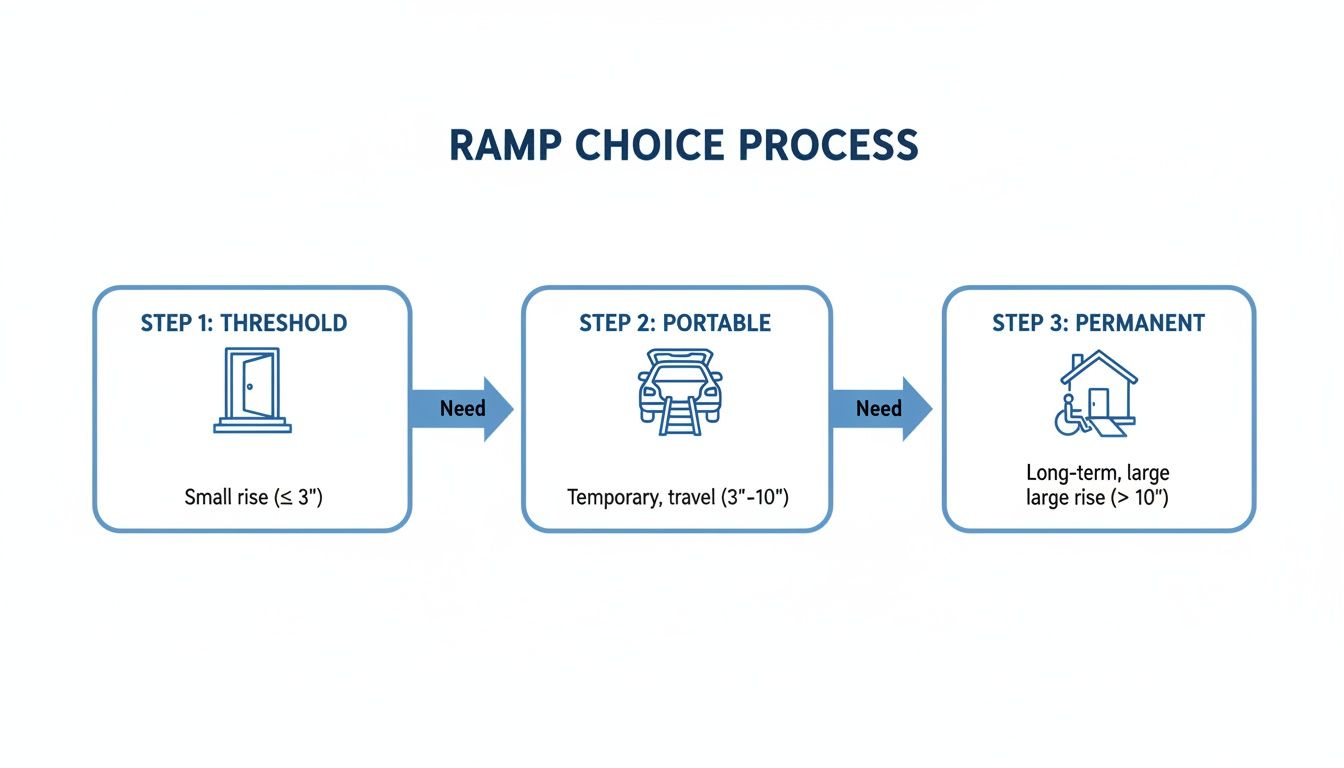
As you can see, small bumps are handled easily by threshold ramps. But as the height increases, you'll need a longer portable or even a permanent ramp to keep that slope gentle and safe.
The last two pieces of the puzzle are width and landing space. Your ramp needs to be wide enough for your chair to fit comfortably with a little room on each side. A usable width of at least 36 inches is the standard for most electric wheelchairs.
Of course, not all power chairs are the same size. To be absolutely sure, it's always best to measure your specific chair. We've got a great walkthrough on getting the right dimensions in our article about how wide an electric wheelchair is. It’ll help you pick a ramp that feels secure, not cramped.
Just as important is the landing space. You need a flat, clear area at both the top and bottom of the ramp.
Without enough landing space, getting on and off the ramp can feel awkward and risky. By taking the time to measure your rise, calculate the right length, and confirm you have plenty of width and landing room, you're setting yourself up for success. You won't just be buying a ramp—you'll be getting a perfect, safe solution that truly makes life easier.
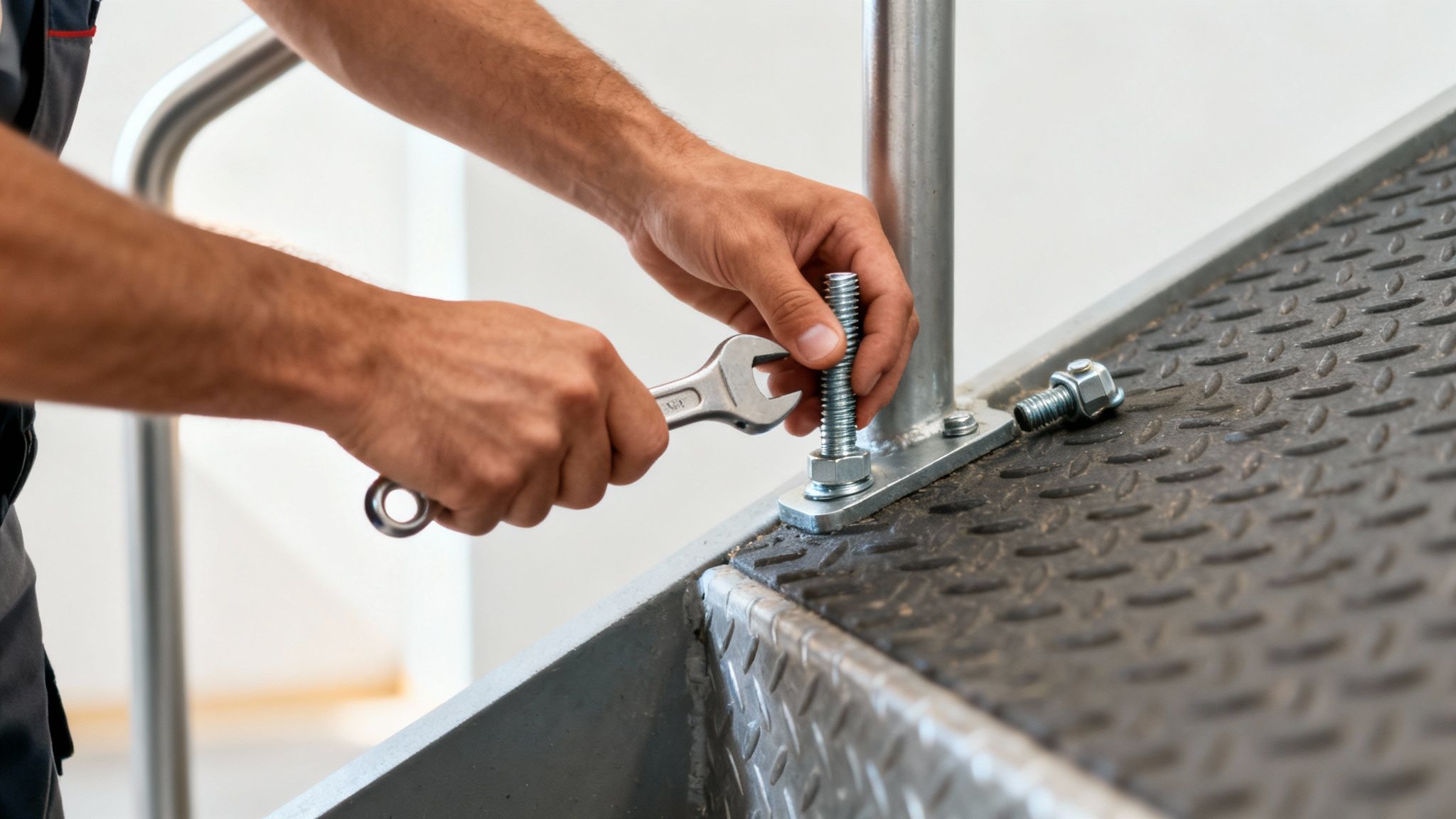
Picking out the perfect electric wheelchair ramp is a huge step forward, but its real value comes to life only when it’s installed correctly and used safely every single day. Let's be honest, a poorly installed ramp isn't just a minor hassle—it can be a serious hazard.
This is where paying attention to the details makes all the difference. Following the right steps for installation and daily use is what gives you peace of mind, ensuring every trip up or down that ramp is smooth, stable, and secure. It’s all about building a foundation of safety you never have to second-guess.
The single most critical part of any ramp installation is making sure it is absolutely stable. An electric wheelchair ramp has to be securely anchored to prevent any slipping, shifting, or wobbling while you're on it. A ramp that moves even a fraction of an inch can create a dangerous gap or cause a sudden jolt, which could lead to losing control.
For permanent and modular ramps, this means physically fastening the structure to the landing surface (like your porch) and the ground. We strongly recommend professional installation to make sure these connections are rock-solid and meet local building codes.
Portable ramps demand just as much care. You have to make sure they are set firmly in place, with the top lip resting completely on the upper surface, before every single use.
Beyond just a secure anchor, several key features elevate a basic ramp into a truly safe system. These aren't just nice-to-have add-ons; they are essential for preventing accidents, especially on ramps that are a bit longer or steeper.
Think of these as non-negotiable safety features:
A common installation mistake is overlooking the transition at the top and bottom of the ramp. The connection points should be completely flush with the ground and the landing to prevent a "bump" that can jolt the user or catch a wheelchair's front casters.
Once your ramp is installed, safety becomes a daily habit. A quick, routine check can stop problems before they even start, making sure your path is always clear and secure. It only takes a minute but provides lasting security.
Before using your ramp each day, run through this simple inspection:
By making these practices part of your routine, your electric wheelchair ramp becomes a dependable and safe part of your life. While we've focused on wheelchair ramps here, many of these same principles apply to mobility scooters. You can learn more by checking out our guide on the 8 best mobility scooter ramps.
Think of your electric wheelchair ramp as a crucial investment in your freedom and day-to-day mobility. Just like any important tool you rely on, it needs a bit of regular care to keep it safe, sturdy, and ready to go for years to come.
Spending just a few minutes on simple upkeep can head off bigger headaches down the road. It’s a lot like taking care of your car—you wouldn’t ignore a weird noise or a flat tire, right? The same idea applies here. A little cleaning and a few quick checks are all it takes to protect your investment and, most importantly, keep you safe every time you use it.
Of course, the right way to care for your ramp really depends on what it's made of and what type it is.
There's a reason aluminum ramps are so popular, especially the portable and modular kinds. They're tough as nails and naturally fight off rust. Still, you’ll want to pay some attention to the surface and any moving parts to keep them working perfectly.
The number one job is keeping that non-slip surface clean. Dirt, mud, and slick wet leaves can pile up and make the ramp lose its grip, which is a major safety issue. Usually, a quick once-over with a stiff brush or a good rinse with a garden hose is all you need to clear off the gunk.
If you have a folding or portable ramp, pay special attention to the hinges and locking pins. These are the parts that make sure your ramp is secure when you set it up.
Permanent ramps built from wood or steel are made to last, but they have a tougher battle against the weather over time. Staying on top of maintenance is key to preventing bigger structural problems.
For wooden ramps, your main enemies are rot and splintering. At least twice a year, give the whole ramp a thorough inspection. Look for any soft spots, cracks, or signs of decay, especially where the wood touches the ground. The best defense is a good offense: apply a fresh coat of sealant or weather-resistant paint every couple of years to keep moisture out.
When it comes to steel ramps, rust is public enemy number one. The second you see any starting to form, it's time to act. Just sand the rusty spot down to the bare metal, then hit it with a rust-inhibiting primer and paint. This will stop the rust in its tracks before it can weaken the ramp.
Sticking to a simple seasonal checklist makes routine care feel like second nature. This proactive approach ensures your electric wheelchair ramp stays a safe and reliable bridge to your independence, no matter the season.
Spring Cleaning: Clear off all the debris left over from winter. Give all the bolts and fasteners a check to make sure they’re tight, especially after the ground has thawed and refrozen.
Summer Safety Check: With more use in the warmer months, inspect the non-slip surface for any signs of wear and tear. If you have a wooden ramp, now’s a good time to check for any splintering.
Fall Preparation: Sweep leaves and other debris off regularly so they don't become a slippery mess. This is also the perfect time to apply a new coat of sealant to wood ramps before winter hits.
Winter Watch: Always keep your ramp clear of snow and ice. Try to use a calcium chloride-based ice melt instead of rock salt, which can eat away at metal and damage wood over time.
Let's be honest, the cost is often the first thing people worry about when thinking about an electric wheelchair ramp. But it doesn't have to be a roadblock to getting the access you need. Figuring out the potential costs and all the different ways to get funding can make this essential piece of equipment surprisingly affordable.
The price tag on a ramp can swing quite a bit depending on what you need. A simple, portable aluminum ramp to get you over a couple of steps might only be a few hundred dollars. On the other hand, a permanent, professionally installed modular system for a higher porch could run anywhere from $2,000 to over $10,000. Seeing those numbers can feel like a gut punch, but there are so many programs out there designed specifically to help with these costs.
The trick to affording the right ramp is simply knowing where to look for help. You might be surprised to find out you qualify for support that could dramatically lower, or even completely cover, the out-of-pocket expense.
Here are a few of the most common places to start:
My best advice? Be your own advocate. Get on the phone with your insurance provider or local support agencies early in the process. Ask them exactly what paperwork you need to get an application or claim started.
Don't stop at insurance and government programs. There's a huge network of non-profit organizations and community groups that offer financial help for home accessibility projects. These groups exist for the sole purpose of improving life for people with mobility challenges.
When you're looking for financial help, casting a wide net is the way to go. You can start with guides on finding grants for nonprofits which often point to local and national organizations that provide grants directly to individuals.
Many foundations for specific conditions, like the Multiple Sclerosis Society or Muscular Dystrophy Association, have assistance programs. And don't forget to look right in your own backyard—local groups like the Lions Club or Rotary Club often have community funds set aside for exactly this kind of thing. By piecing together a few different resources, you can build a solid plan to get the safe, reliable ramp you need.
Working through the details of picking out an electric wheelchair ramp can bring up a lot of questions. We get it. This section is designed to give you clear, straightforward answers to the things we hear most often, clearing up any confusion so you can feel completely confident in your choice.
Think of this as your final checklist before making this important investment in your mobility.
Yes, absolutely. This is probably the most critical point to understand. Electric wheelchairs are a whole different ballgame compared to manual chairs—they are significantly heavier. Your power chair alone can weigh anywhere from 150 to 250 pounds, and that’s before you even get in it.
You have to choose a ramp with a weight capacity that can comfortably handle the combined weight of your chair and yourself, with room to spare. Trying to use a ramp built for a manual wheelchair is a serious safety hazard; it could easily buckle or fail under the load. Always, always check the maximum weight limits before you buy.
While it might seem like an easy fix, using a portable ramp as your permanent, everyday solution is a bad idea. Portable ramps are designed for one thing: temporary access. They’re perfect for getting over a curb, into a van, or up a few steps when you’re out and about.
For the ramp you use every single day at home, a permanent or modular ramp is the only safe and durable choice. These are built to handle constant traffic and whatever the weather throws at them. More importantly, they’re securely anchored to the ground and often come with essential safety features like handrails, which you won’t find on most portable models.
A permanent ramp provides peace of mind. It’s a stable, reliable fixture you never have to set up or worry about shifting, ensuring a safe passage every time you leave or return home.
When it comes to slope, one word says it all: safety. The single most important takeaway is that a gentle slope is always, without question, the safest option. There's a reason the ADA recommends a 1:12 ratio (that’s one foot of ramp for every one inch of vertical height)—it’s the gold standard for safe, controlled access.
A ramp that’s too steep is a recipe for disaster in a power chair. Going up, you risk tipping over backward. Going down, you could lose control and pick up speed way too fast, especially if the surface is wet or icy. Always prioritize a gentler slope over a shorter, steeper ramp. It makes all the difference.
This really comes down to how you plan to use it, because both materials have their strengths. For most people, aluminum is the clear winner. It hits that sweet spot of being incredibly strong yet surprisingly lightweight, which makes it perfect for portable, vehicle, and even modular ramps. The biggest perk? Aluminum doesn't rust.
Steel, on the other hand, is an absolute tank—it's heavier but exceptionally strong. This makes it a solid choice for permanent, high-traffic commercial ramps that are professionally installed and coated to prevent rust. For almost all home and travel situations, though, aluminum gives you the best all-around mix of strength, longevity, and convenience.
Here at Electric Wheelchairs USA, our mission is to help you find the perfect key to unlocking your mobility. If you still have questions or just want to talk through your options with an expert, our team is here and ready to help.
Feel free to explore our huge collection of ramps and find your ideal solution today at https://www.electricwheelchairsusa.com.


Leave a comment