(800) 682-9444
Call Now


Getting into a car from a wheelchair is all about a few key things: proper positioning, solid body mechanics, and a little bit of preparation. Once you get the hang of it, the process of aligning your chair, locking everything down, and using your body’s own momentum becomes second nature.
A successful, low-stress transfer doesn't just happen. It all starts with a few crucial setup steps before you even think about moving. Think of it as creating the perfect, safe environment for the transition.
When you skip these initial preparations, you introduce unnecessary risks and can turn a routine task into a real struggle. By running through a quick pre-transfer checklist every time, you build muscle memory and confidence that makes every trip that much smoother.
The main goal here is simple: minimize the distance and effort needed to get from the wheelchair seat to the car seat. Getting the positioning just right is the foundation that protects both the wheelchair user and any caregiver from potential strains or injuries.
Proper alignment is everything. Start by parking the car somewhere with plenty of room to open the door all the way, ideally on flat, level ground. Trying to transfer on a slope or uneven surface like gravel can make your wheelchair unstable and the whole process a lot harder than it needs to be.
Once you've got the car situated, bring your wheelchair as close as you can to the car seat. The sweet spot is usually a slight angle, somewhere around 30 to 45 degrees, with the chair facing the car. This closes the gap and sets you up for a much easier pivot.
Before you start the move, make sure you've done the following:
Before every single transfer, it pays to run through a quick mental checklist. This habit ensures nothing gets missed and keeps the process safe and predictable.
| Check Point | Why It Matters | Quick Tip |
|---|---|---|
| Car Positioned on Level Ground | Prevents the car or wheelchair from rolling unexpectedly. | Find the flattest spot in the parking lot, even if it's a few steps further away. |
| Wheelchair Brakes Locked | The absolute most critical step to prevent the chair from moving. | Double-check the brakes by giving the chair a gentle push. It shouldn't budge. |
| Footrests Out of the Way | Creates a clear, unobstructed path for your feet and legs. | Swing them to the side or remove them completely before you get close to the car. |
| Car Door Fully Open | Gives you maximum space to maneuver without bumping into anything. | Make sure you have enough clearance from other cars or objects. |
| Seat Heights Leveled | Reduces the physical effort needed to move from one seat to the other. | If your car seat has power controls, adjust it before bringing the wheelchair over. |
Consistently following these steps builds a routine that becomes automatic, making every transfer safer and less stressful for everyone involved.
How you move is just as important as how you set up. Using good body mechanics cuts down on the physical strain of the transfer and protects your back and joints. The trick is to use controlled, deliberate movements instead of just trying to muscle through it.
Always engage your core muscles to keep your torso stable throughout the move. Before you start, scoot forward to the very edge of your wheelchair cushion. This one little adjustment shortens the distance you have to cover and gets your center of gravity in the right spot for a good pivot.
A common mistake I see is people trying to lift their entire body weight with just their arms. Instead, think of it as a controlled slide or pivot, and use momentum to help you. A great technique is to lean your head and shoulders in the opposite direction of where you want your hips to go. This "head-hips relationship" makes the movement feel lighter and more natural.
Once you’re safely in the car, the next puzzle is what to do with the wheelchair itself. For a deep dive into that topic, check out our guide with tips for transporting your mobility scooter or wheelchair. It covers everything from stowing a folded chair to using vehicle lifts, ensuring your mobility device is ready for the ride, too.
Everyone's body is different, so the "best" transfer method is always the one that feels safest and most comfortable for you. There's no magic one-size-fits-all solution here. The goal is to find a repeatable technique that builds your confidence and cuts down on the physical strain for everyone involved, whether you're transferring on your own or with a caregiver.
Choosing the right approach really boils down to a few key things: your upper body strength, whether you can bear any weight on your legs, and the car you're getting into. We'll walk through the most common and effective techniques, from methods that rely on your own strength to those that use specialized equipment, to help you find a solid strategy.
This flowchart can help you visualize the crucial stability checks you need to do before any transfer.
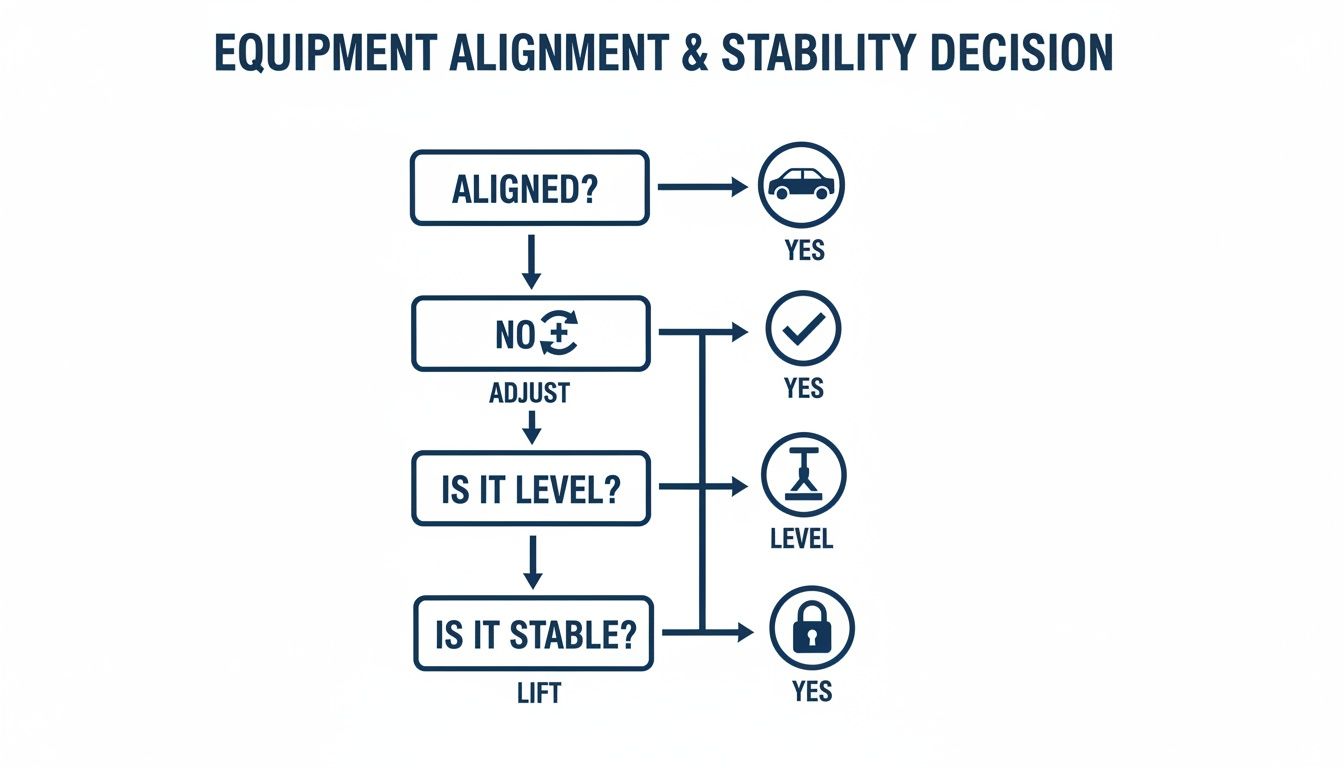
It highlights a simple but non-negotiable sequence: align, level, and secure. Getting this right before you move is the foundation of a safe transfer.
This is a fantastic option if you can bear at least some weight on your legs, even for just a moment. It’s all about a controlled standing and pivoting motion to move from the wheelchair into the car seat, making the movement as fluid as possible.
First, you'll want to position your wheelchair at a 30 to 45-degree angle to the car seat. Once the brakes are locked and the footrests are out of the way, scoot forward to the edge of your seat. Plant your feet firmly on the ground, making sure the foot closer to the car is slightly behind the other one.
Next, place one hand on the wheelchair armrest and the other on a solid part of the car, like the dashboard or the seat itself. A word of caution: avoid grabbing the car door, as it can swing unexpectedly. From there, push up into a standing or semi-standing position, pivot your body toward the car, and gently lower yourself onto the seat. If you have a caregiver, they can provide support at your hips or use a gait belt to help guide the motion.
For those with good upper body strength who can't bear weight on their legs, a sliding board is a total game-changer. These boards, usually made of smooth wood or plastic, create a sturdy bridge between the wheelchair and the car seat, letting you slide across with very little friction.
The setup is pretty much the same as the stand-pivot. Get the chair close to the car seat and make sure both surfaces are as level as you can get them. Then, lift one hip and slide one end of the board firmly underneath you, placing the other end securely on the car seat.
The most common mistake I see with a sliding board is not getting it far enough under the thigh. You want about one-third of the board under you to create a stable base. This is what keeps the board from slipping out mid-transfer.
With both hands on the board, use a series of small scoots or pushes, lifting and shifting your body across until you're safely on the car seat. To finish, just lean away, lift your hip, and slide the board out.
When a manual transfer just isn't safe or possible, adaptive equipment can make all the difference. These solutions are designed to do the heavy lifting for you, offering a safe and dignified way to get into a vehicle.
Mechanical Lifts: These devices can be portable or permanently installed in a vehicle. They use a sling to gently lift and move you from your wheelchair directly into the car. They're the ideal solution for anyone requiring total assistance. While they are a bigger investment, they provide the highest level of safety and practically eliminate physical strain on caregivers. For more details on managing heavier equipment, check out our guide on how to lift an electric wheelchair into a car, which covers related logistics.
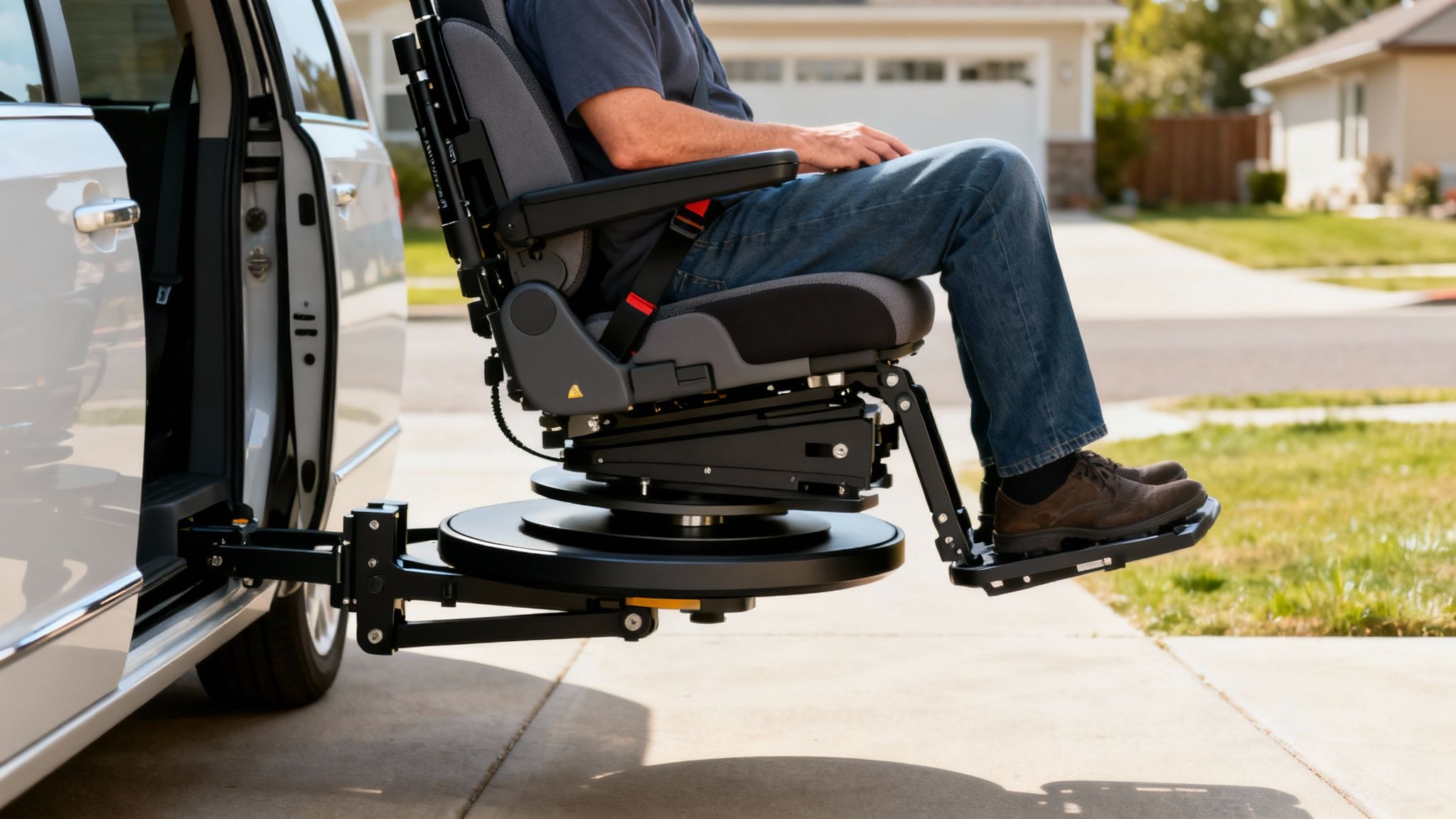
Swivel Seats: You might hear these called transfer seats. They are car seats that can actually rotate, extend out of the car, and sometimes lower to wheelchair height. You transfer onto the seat while it's outside the vehicle, and then the seat lifts and swivels you right into position inside the car. This technology really cuts down on the effort and complexity of a transfer.
Helping someone transfer from their wheelchair to a car is about much more than just physical strength. It's really a partnership—one built on good communication, solid technique, and a whole lot of trust. As a caregiver, your calm and confident approach can turn what might be a stressful moment into a smooth, team effort.
Your main jobs here are to provide a steady hand, guide the movement, and make sure both of you stay safe and injury-free.
Always remember: you're assisting, not lifting. The goal is to work in sync, anticipating what they need and offering support right where it counts. This keeps the transfer safe while respecting the person's independence and dignity.
You can't help someone else effectively if you don't protect your own body first. Caregiver strain, particularly back injuries, is incredibly common but often completely preventable. You've heard it a million times, but the golden rule is to lift with your legs, not your back. This isn't just a catchy phrase; it's the absolute core of providing assistance safely.
Always start by getting as close as you can to the person you're helping. This simple step cuts down on awkward reaching and bending, which is where injuries often start.
Making a conscious habit of checking your posture and movement before every single transfer can save you from chronic pain down the road.
Never assume you know what the other person is thinking or about to do. Clear, simple communication is your best tool. Agree on a simple cue, like counting "one, two, three, move," to synchronize your efforts. This tiny step ensures you're both moving together as a team, not accidentally working against each other.
Ask them where they feel most comfortable with you placing your hands. Some people might prefer firm support on their hips, while others find a steady hand on their back more reassuring. A gait belt is often a fantastic solution here. It gives you a secure, reliable place to grip without having to pull on their clothes or arms, which can be uncomfortable or even cause skin tears.
"The most successful transfers happen when the caregiver acts as a stable anchor, not the engine. Your role is to guide the pivot and control the descent, letting the person do as much of the work as they safely can."
By establishing this rhythm—both verbally and physically—you build a routine. Over time, it becomes second nature, which helps lower anxiety for everyone and makes the whole process faster and more efficient.
How you provide physical support will change depending on the transfer method. Here's a quick look at how you can adapt your assistance for the best results.
For a Stand-Pivot Transfer:
Your number one job is to be their rock-solid stability as they stand and turn. Position yourself directly in front of them, using your own knees to block theirs from buckling. Place your hands firmly on the back of their hips or, even better, on a gait belt. As they push themselves up to a standing position, you'll guide their pivot toward the car seat and then help control their descent as they sit down.
For a Sliding Board Transfer:
With a sliding board, your role shifts to preventing slips and providing a counterbalance. You can start by gently leaning them away from the car to get the board securely placed under their hip. Once the board is set, your support at their torso will keep them steady as they slide across. You're there to make sure they don't move too fast or lose their balance along the way. For anyone looking to deepen their skills, resources on how to pass the CNA skills test often cover safe patient handling techniques that are incredibly useful in these scenarios.
Ultimately, your confidence as a caregiver will grow with preparation, practice, and open communication. When you focus on safe body mechanics and work together as a team, you can master the wheelchair-to-car transfer and make every trip that much smoother.
Sometimes, even with the best technique, a manual transfer just isn't the safest or easiest way to go. This is where adaptive equipment can be a real game-changer, turning what feels like a major physical challenge into a much more straightforward process. These tools are designed to bridge the gap, take the strain off your body, and boost confidence for both you and anyone helping out.
The right piece of gear can completely transform your daily routine, saving energy and dramatically cutting down the risk of an injury. Whether you need a simple, portable aid for a little extra help or a fully automated system to handle the whole transfer, there’s a solution out there for almost every situation and vehicle.
You don't always need a high-tech, expensive solution. Often, a small, well-designed tool is all it takes to make transfers safer and less of a struggle. These aids are usually portable, affordable, and pretty simple to use.
Transfer Boards: We've mentioned these before, but they're worth highlighting again. A good sliding board creates a sturdy bridge from your wheelchair to the car seat. It's a fantastic option if you have solid upper-body strength but can't put weight on your legs, allowing for a smooth and controlled slide.
Grab Bars and Handles: These can be installed permanently in your car or come as portable, strap-on versions. A securely placed grab bar gives you a stable point to hold onto, offering that extra leverage and stability you need during a stand-pivot transfer.
Gait Belts: While many think of this as just a caregiver's tool, a gait belt is a must-have for just about any assisted transfer. It gives your helper a secure place to grip—instead of pulling on your arms or clothes—which makes the whole movement steadier and more controlled.
These simple tools are often the first step people take to make transfers easier. They don't require major modifications to your car and can make a huge difference in your day-to-day life.
When you need more than just a little help, advanced adaptive equipment can step in and do the heavy lifting for you. These systems are typically installed right into your vehicle and are built for those who need significant or total assistance to get in and out of the car.
The demand for better accessibility has led to a boom in the wheelchair accessible vehicle (WAV) market. For instance, many rear-entry vans use hydraulic lifts to create a perfectly level transfer surface, which takes a ton of physical strain out of the equation. And some of the specialized transfer seats that swivel you directly into the car can reduce the physical effort needed by up to 60%, according to industry ergonomic data. This evolution in vehicle tech is offering more dignified and less strenuous options than ever.
The real goal of advanced equipment isn't just getting from point A to point B. It's about restoring that sense of freedom and spontaneity, making a simple trip to the store feel like a normal part of your day instead of a huge logistical hurdle.
Deciding on the right adaptive aid can feel overwhelming. This table breaks down some of the most common options to help you figure out what might work best for your specific mobility needs, vehicle, and budget.
| Equipment Type | Best For | Key Benefit | Things to Consider |
|---|---|---|---|
| Transfer Board | Individuals with good upper-body strength who can't bear weight on their legs. | Low-cost, portable, and creates a simple bridge for sliding transfers. | Requires a relatively level transfer surface; may not work for high vehicles like trucks. |
| Grab Handles | People who need extra stability and leverage during a stand-pivot transfer. | Inexpensive and provides a secure anchor point to pull on. | Must be installed securely to be safe; portable versions may have weight limits. |
| Swivel Seat | Users who find it difficult to twist or pivot into a car seat. | The seat rotates and extends out of the car, eliminating awkward movements. | Requires professional installation and is a more significant investment. |
| Vehicle Lift/Hoist | Individuals who require full assistance and cannot transfer themselves. | Provides the highest level of safety and eliminates physical strain for caregivers. | A major vehicle modification and the most expensive option. |
Each piece of equipment serves a unique purpose. The key is to honestly assess your physical abilities and think about what would make the biggest positive impact on your daily travels.
Two of the most impactful advanced solutions are swivel seats and vehicle lifts. They tackle the toughest transfer challenges with mechanical precision and reliability.
Swivel Car Seats
Also called transfer seats, these are an incredible solution for many people. The entire car seat actually rotates, extends out of the vehicle, and often lowers to the same height as your wheelchair.
This lets you do a simple, level transfer onto the seat while it's completely outside the car. Once you're safely on, the seat smoothly lifts and swivels you back into position. It almost completely gets rid of the need for awkward twisting, lifting, or pivoting in a tight space.
Vehicle Lifts and Hoists
For those who need to stay in their wheelchair for the ride or who require full assistance, a mechanical lift is the top-tier solution. These systems use a comfortable, durable sling to gently lift you from your wheelchair and place you directly into the car seat.
While they are a significant investment, these systems offer the highest level of safety and practically eliminate the risk of injury for caregivers. And it's not just about lifting people—there are also lifts designed just for your mobility device. If you're dealing with a heavy power chair, it's definitely worth learning about how to choose the right scooter lift for cars to handle the chair itself. It all comes down to matching the right technology to your specific physical needs so every trip can start safely.
Even the most practiced technique can fall apart when the real world gets in the way. A perfect transfer in your spacious, dry garage feels a whole lot different than one in a cramped parking spot during a downpour. Learning how to adapt to these common curveballs is the key to staying safe and confident on every trip.
Thinking on your feet is a non-negotiable skill when you're mastering the wheelchair-to-car transfer. Things like tight spaces, bad weather, or a big height difference between the wheelchair and the car seat aren't just minor annoyances—they're genuine safety risks that need a smart, practical solution.

Let's break down how to handle these everyday hurdles.
Not every parking spot is going to be your friend. When you're stuck in a tight space that won't let you open the car door all the way, your angle of approach has to change. Forget the usual 45-degree angle; you might need to come in much sharper, almost parallel to the car. This cuts down on the space you need, but be warned: it demands more upper body strength to scoot yourself sideways onto the seat.
Weather is another huge factor. Rain, snow, or ice can turn a simple transfer into a hazardous one by making surfaces slick. In these situations, always prioritize finding a dry, clear patch of ground. It's far better to spend an extra minute repositioning the car than to risk a slip. I always recommend keeping a small, absorbent towel in the glove box—wiping down a wet transfer board or a grab handle can make all the difference for a secure grip.
One of the most common frustrations is the height gap between the wheelchair cushion and the car seat, especially with today's mix of taller trucks and lower sedans. If the car seat is higher, you’ll need to generate more power from your arms and legs to push yourself up. A portable grab handle that suctions to the car frame can give you that extra leverage.
On the flip side, if the car seat is lower, the real challenge is controlling your descent so you don't just flop down. A sliding board is your best friend here, as it lets you manage that downward slide with much more control.
A key sign that a transfer method has become too strenuous or unsafe is consistent pain, near-misses, or a growing dread of the process. These aren't things to ignore; they are clear indicators that it's time to re-evaluate your strategy.
Life changes, and so do our physical abilities. A technique that felt easy six months ago might start to feel difficult or even risky. It's so important to be honest with yourself and recognize when a transfer method just isn't working for you anymore.
Keep an eye out for these signs:
When you start noticing these things, it's time to call an occupational therapist. They can give you a professional assessment and suggest new techniques or adaptive equipment you might not have considered. This might also be the point where you explore bigger solutions. The market for wheelchair accessible vehicle (WAV) converters is growing, largely because ramps enable a person to simply roll into the vehicle, cutting down transfer time and injury risk. While the cost can be a barrier, data shows these vehicles make a real difference, with user surveys reporting a 50% drop in fall risks. You can read more about this trend and its safety benefits by reviewing the latest industry research.
For those not ready for a full vehicle conversion, just exploring different ramp options can be a game-changer. Our guide on wheelchair ramps for cars and how to choose one offers some great insights that can help you find the right fit for your situation.
Even with the best instructions, you're bound to have questions. It's only natural. Getting the hang of wheelchair-to-car transfers involves a lot of personal variables and unique little hurdles. Here are some of the most common questions we hear, with straightforward answers to help you fine-tune your technique and feel more confident.
Think of this as your go-to for those "what-if" situations that a standard guide might not cover. Nailing these details can make a huge difference in how safe and easy every single trip feels.
This is one of the first things people ask, and for good reason! Once you're safely in the car, the wheelchair still needs a ride. How you handle it really boils down to whether you have a helping hand.
If a caregiver or friend is with you, the answer is simple: they can fold the wheelchair and pop it in the trunk or back of the vehicle. Problem solved. But for those of us who drive independently, it takes a bit more strategy.
The trick is to find the right match between your chair’s design and your own ability to lift and stow it.
Oh, absolutely. The kind of car you drive can make the difference between a smooth transfer and a frustrating struggle. Some vehicles are just built better for the job.
As a general rule, cars with wide door openings and seat heights that are level with your wheelchair cushion will make your life a whole lot easier. This is precisely why SUVs, CUVs, and minivans are so popular. They often create a near-level surface, meaning you can slide or pivot across with much less effort—no need to hoist yourself up or drop yourself down.
Sedans, on the other hand, can be tricky. Their seats are usually lower, which requires a lot more upper body and core strength to manage the transfer in and out. Next time you're car shopping, bring a tape measure with you. Seriously. Checking the door opening width and the height from the ground to the seat cushion can help you find a vehicle that works for you, not against you.
Choosing a vehicle that fits your transfer style is just as important as choosing the right wheelchair. It’s a decision that affects your safety, energy levels, and independence every single day.
Preventing injuries is all about good technique, clear communication, and knowing your limits. For both the person transferring and any caregiver helping, using proper body mechanics isn't just a suggestion—it's essential.
Always remember to bend at the knees and keep your back straight. Let your powerful leg muscles do the heavy lifting, not your spine. It's also critical to get the wheelchair as close as possible to the car seat to minimize the gap you have to cross.
For caregivers, communication is key. Stay close and talk through every single step. A simple countdown like "Ready? One, two, three" can synchronize your movements and prevent a stumble. We also highly recommend using a gait belt. It gives you a much safer and more stable grip than grabbing onto clothing or an arm.
And if a transfer ever feels painful or unsafe, stop immediately. That's your body's alarm bell telling you something is wrong. Take a moment to reassess the setup, try a different approach, or acknowledge that it might be time to bring in a tool like a transfer board to make things safer for everyone.
At Electric Wheelchairs USA, we believe that the right equipment is the key to unlocking independence. From lightweight folding wheelchairs perfect for solo drivers to powerful mobility scooters that can handle any adventure, our expert team is here to help you find the perfect mobility solution. Explore our collection and discover how we can help you move with confidence and freedom.
Find your perfect mobility solution at https://www.electricwheelchairsusa.com.


Leave a comment