(800) 682-9444
Call Now


Let's cut right to the chase: most electric wheelchairs can handle a little water, but they are absolutely not waterproof.
You can think of your power chair kind of like a high-end smartphone—it's water-resistant enough to survive getting caught in a light drizzle, but it was never designed to go for a swim. A sudden, light rain shower on your way to the car might be okay. A torrential downpour or a deep puddle, on the other hand, poses a serious threat to its sensitive electronics.
Understanding that critical difference between "water-resistant" and "waterproof" is the first step in protecting your investment in your mobility. Your electric wheelchair is a sophisticated piece of machinery. It has a complex electrical system powering the battery, the joystick controller, and the motors.
While these crucial components are shielded from minor splashes, they are not hermetically sealed against significant amounts of water.
Manufacturers know that accidents happen. They design these chairs anticipating things like a spilled drink or getting caught in a brief, light rain. What they don't do is build them to withstand a heavy storm or being submerged in water. This is exactly why user manuals are filled with warnings against using the chair in wet environments.
Ignoring that advice can lead to some pretty serious headaches:
The core takeaway here is simple: you don't need to panic over a few raindrops, but being proactive about protecting your chair is essential. If you treat your power chair with the same care you would any other important electronic device, you'll ensure it stays reliable for years to come.
For a deeper dive, our guide on using an electric wheelchair in the rain offers even more detailed strategies and tips.
To help you quickly assess the danger, we've put together a simple summary table. It breaks down the risk level for different types of water exposure and what you should do immediately. This will set the stage for understanding the specific safety ratings and protective gear we'll cover next.
This table summarizes the risks associated with different types of water exposure for a typical electric wheelchair, helping users quickly assess their situation.
| Type of Water Exposure | Common Scenario | Typical Risk Level | Immediate Action Recommended |
|---|---|---|---|
| Light Mist/Fog | Walking through morning fog or a very light mist. | Low | Generally safe. Wipe down the chair after exposure. |
| Light Rain/Drizzle | Caught in a brief, light shower for a few minutes. | Low to Moderate | Seek shelter promptly. Dry the chair thoroughly, especially the controls. |
| Moderate to Heavy Rain | Navigating through a steady downpour. | High | Immediate shelter is critical. Do not operate. Follow drying procedures. |
| Deep Puddles | Driving through standing water that splashes up high. | High | Avoid completely. If unavoidable, power down and dry immediately. |
| Hose/Pressure Washer | Cleaning the wheelchair with a direct water stream. | Very High | Never do this. Use damp cloths for cleaning. |
| Full Submersion | Accidentally rolling into a pool, lake, or flooded area. | Extreme | Power off immediately. Do not attempt to use. Contact a technician. |
Remember, this table is a general guide. Always refer to your specific user manual for manufacturer recommendations, as water resistance can vary significantly between models.
To really get to the bottom of whether your electric wheelchair can handle a bit of water, we have to look past the simple warnings and peek into the engineering. The secret lies in a technical standard called the Ingress Protection (IP) rating.
Think of an IP rating like a universal scorecard for how well a device's shell protects all the sensitive electronics inside. It's a simple two-digit code that tells you exactly how resistant the chair is to solids (like dust and dirt) and liquids (like water). This isn't just some vague marketing promise; it's a precise measurement defined by international standards.
For electric wheelchairs, the number that really matters is the second one—the one that deals with water.
This diagram shows the direct link between a power chair getting wet and the very real possibility of damage.
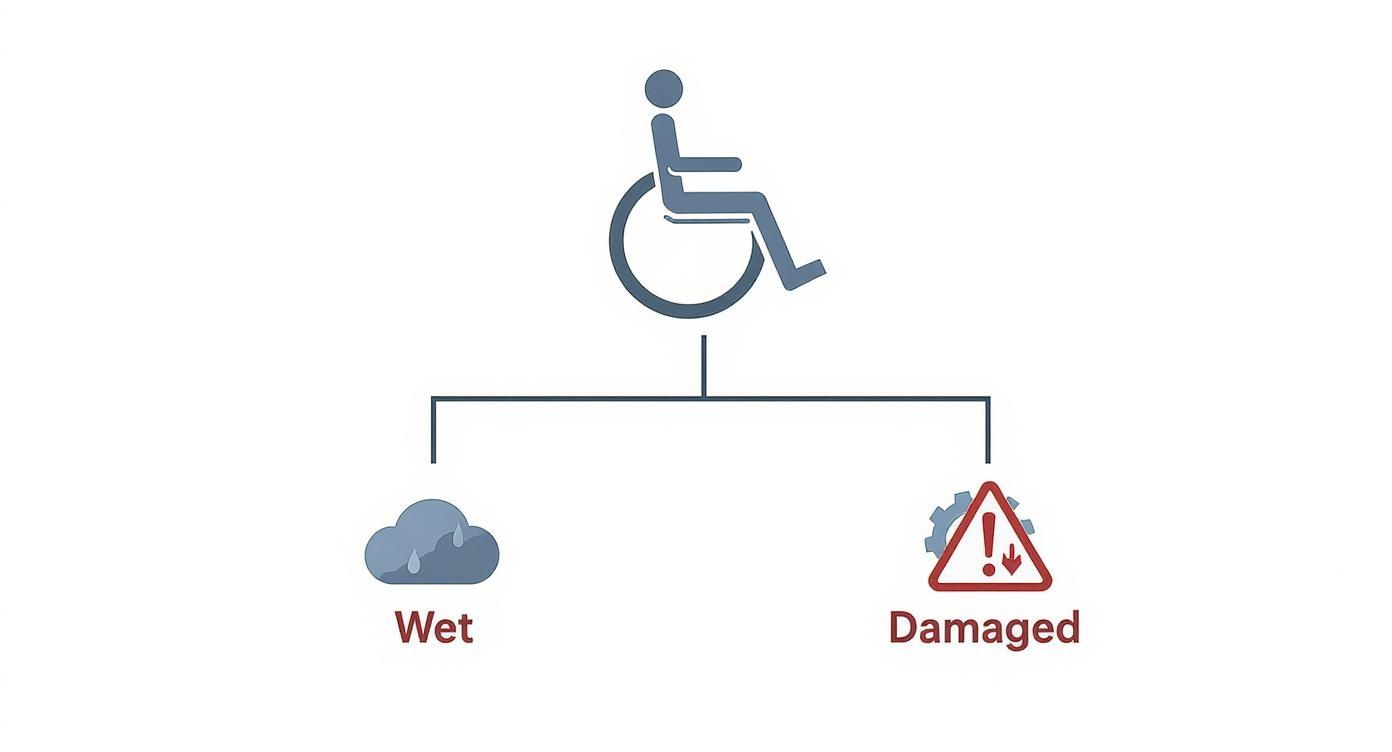
As you can see, getting caught in wet conditions is a primary cause of equipment failure, which is why understanding your chair's specific limits is so important.
That second digit in the IP rating is all about liquid protection, and it ranges from 0 (no protection at all) to 9 (protected against high-pressure, high-temperature water jets). Sometimes you might see an "X" where the first number should be (like in IPX4). That just means the chair wasn't tested for dust or solid particles.
Most electric wheelchairs are just not built for a downpour or prolonged exposure to water. Their tolerance is limited by design. A lot of models you'll see on the market carry an IPX4 rating. This means they can handle splashing water from any direction, but they definitely aren't designed for heavy rain or, heaven forbid, being submerged. You can dig deeper into these safety standards and what they mean for daily use by checking out this comprehensive guide on electric wheelchair safety.
Here’s a quick breakdown of what those numbers actually mean out in the real world:
Getting a handle on this system is a game-changer. A chair with an IPX4 rating gives you a solid defense against accidental splashes, but it's not ready to take on a thunderstorm. It’s the difference between wearing a light windbreaker and a professional diving suit—both offer protection, but for completely different situations.
So, where do you find this crucial piece of info? Your first stop should always be the user manual that came with your electric wheelchair. Manufacturers are required to list the IP rating, and you'll usually find it in the technical specifications or safety warnings section.
Can't find the manual? No problem. A quick search on the manufacturer's website with your chair's model number will almost always pull up a digital copy. Knowing this one little piece of data turns you from a worried user into an informed one.
Once you know your chair's rating, you can make smarter, more confident decisions. For example, if you have an IPX4-rated chair, you know that a quick dash across a parking lot in a light rain is probably fine. But you'll also know that staying out in that same rain for a long time or plowing through a deep puddle that splashes water up into the base is pushing your chair way past its certified limits.
This knowledge empowers you to respect your wheelchair’s design, preventing expensive damage and making sure your mobility aid stays a reliable partner for years to come. It shifts the focus from fearing the weather to simply being prepared for it.
To really get why a sudden downpour is such a big deal for an electric wheelchair, you have to look past the simple "don't get it wet" warning. Water doesn't just make things damp; it launches an all-out assault on the very components that give you your mobility. And the damage isn’t always a dramatic, smoking failure—sometimes it’s a slow, quiet problem that only shows its face weeks down the road.
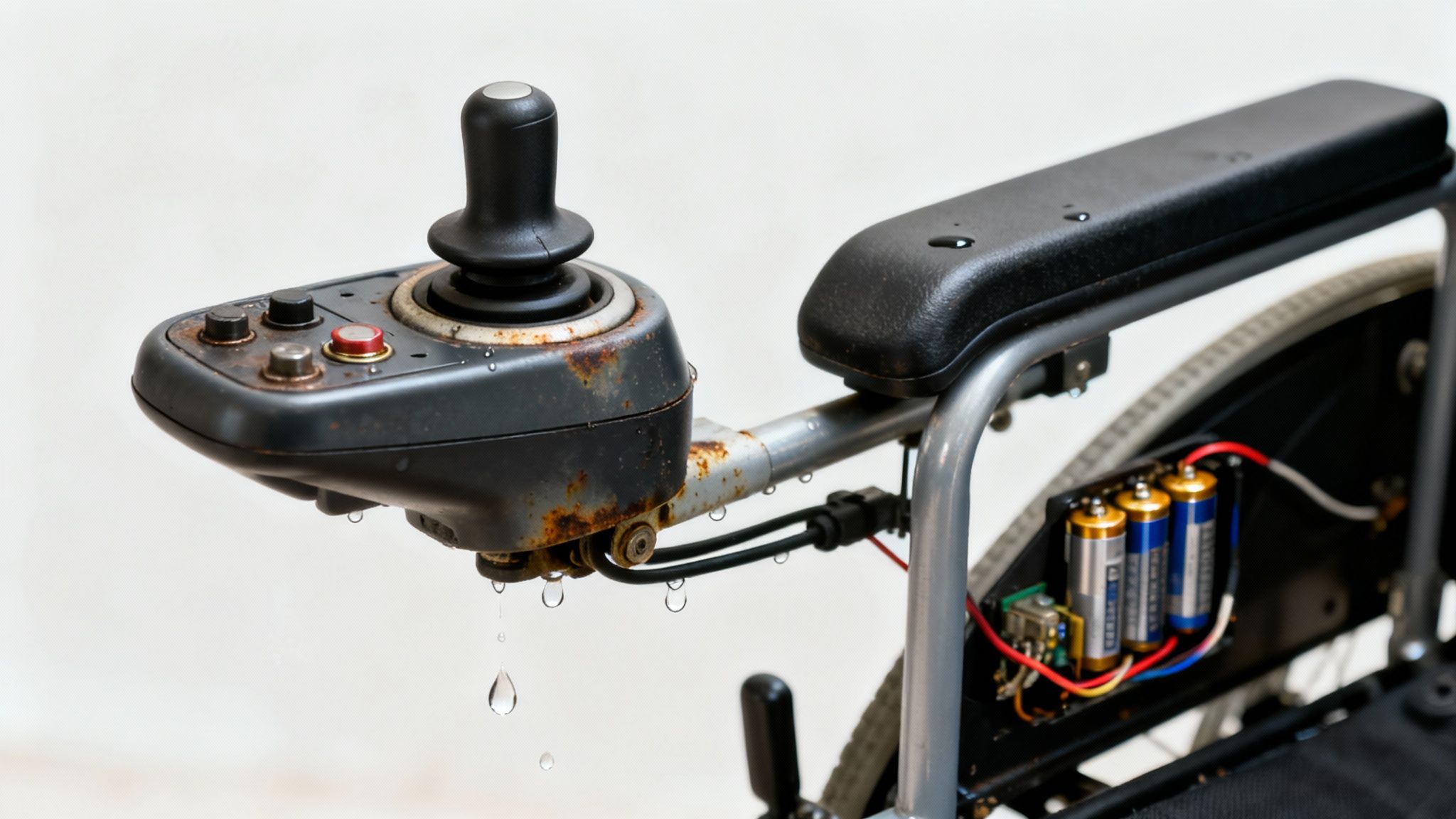
Think of it like a tiny, unnoticed leak in your roof. At first, you see nothing. But over time, that hidden moisture is rotting the beams and compromising the whole structure. Water damage in a power chair works the exact same way—often silently and out of sight.
The most obvious and immediate danger is an electrical short circuit. The brain of your wheelchair is its controller, which is almost always tucked inside the joystick assembly. This little box is packed with delicate circuit boards, processors, and wiring that control everything from your speed and direction to how much juice is left in the battery.
When water gets inside, it creates new, unintended pathways for electricity to travel. Instead of sticking to the circuits, the current takes a shortcut across the water, causing a "short."
This can trigger a few instant nightmares:
Your joystick controller is the central nervous system of your wheelchair. Getting it wet is like pouring a drink on your computer's motherboard. The results are rarely good and often catastrophic.
This isn't just a "what if" scenario. The lack of standardized waterproofing is a real-world problem, especially if you live somewhere with unpredictable weather. Up to 30% of wheelchair users in rainy regions report dealing with water-related issues every single year. In broader surveys, nearly 40% of all power chair owners say they've had to deal with some kind of water damage. You can dive deeper into these issues by exploring research on wheelchair technology and environmental challenges.
Let's say your chair survives getting wet without short-circuiting right away. You're not out of the woods yet. Any moisture trapped inside electrical connectors, battery terminals, or the motor housing kicks off a slower, more sinister process: corrosion.
Corrosion is just a fancy word for metal breaking down. When water and oxygen get to the metal contacts in your chair's wiring, they create a layer of rust or that ugly greenish-blue gunk.
This buildup acts like an insulator, blocking the proper flow of electricity. This creeping damage leads to all sorts of frustrating problems:
This kind of delayed failure is especially maddening because it might not show up until long after the incident, making it tough to connect the dots.
While the electronics are the most critical, they aren't the only parts of your chair at risk. Water can do a number on the structural and comfort components, too.
Seating and Cushions
Most wheelchair cushions are made of foam, which is basically a big sponge. If it gets soaked, drying it out completely is next to impossible. That trapped moisture becomes a perfect breeding ground for:
Frame and Mechanical Parts
Most frames have a protective coating to resist rust, but getting drenched can wear that coating down. Water can find its way into joints, bearings, and fasteners, causing rust that weakens the frame's integrity and makes moving parts grind or seize up. Wiping the frame down with a damp cloth is fine, but a total soaking lets moisture get into places it was never meant to be.
Getting caught in a sudden downpour is stressful for anyone, but when you're in an electric wheelchair, that stress can turn into genuine panic. It’s a lot like dropping your phone in water—those first few moments are absolutely critical. What you do next can mean the difference between a minor inconvenience and a major, costly repair.
The absolute first thing you need to do? Turn off the power immediately. That’s it. Before you do anything else, kill the power. This single action is your best defense against a catastrophic short circuit. From there, find the nearest shelter—a storefront awning, a bus stop, whatever you can find—and get out of the rain as quickly and safely as possible.
Once you’re somewhere dry, fight the urge to turn the chair back on just to see if it’s okay. This is a very common and very expensive mistake. Powering it on can send electricity surging through wet components, frying them for good.

Follow these steps, in this exact order, to give your chair the best chance of a full recovery. The goal is simple: disconnect the power and start drying everything out.
Power Down Completely: Hit the main power button on your joystick or control panel. This stops the flow of electricity to all the vulnerable circuits.
Disconnect the Battery: If you can safely get to your batteries, disconnect them. This physically cuts off the power source from the rest of the electronics, which is the ultimate safeguard against shorts. If you're not sure how to handle your specific battery setup, our guide on how to charge an electric wheelchair offers some great insights into battery safety and handling.
Wipe Down Everything: Grab a dry towel or any absorbent cloth you can find and get to work. Wipe down every surface you can possibly reach, paying special attention to the joystick, control panel, battery housing, and any visible wires or connectors.
In this situation, what you don't do is just as important as what you do. Trying to rush the process or using the wrong tools can easily make things much worse.
Crucial Safety Warning: Never, ever use a high-heat source like a hair dryer or heat gun to try and speed up the drying. That intense heat can warp plastic casings, melt delicate seals, and even damage internal wiring, causing far more harm than the water ever could.
Stay away from these common pitfalls:
If you want to understand more about dealing with wet electronics, looking at the practical steps to fix a water-affected charging port can be helpful. Even though it's for a phone, the core principles—careful drying and avoiding more damage—are exactly the same. Your best tool here is patience. Giving your chair plenty of time to dry out naturally is the safest and most effective way forward.
Okay, so you've managed to get your electric wheelchair out of the downpour. Good first step. But the real work is just beginning. What you do next is what separates a minor inconvenience from a major repair bill down the road. This is where you prevent the sneaky, long-term damage like rust and corrosion from taking hold.
Let's be clear: patience is your best friend right now. Trying to rush the drying process can cause way more harm than good.
First things first, grab some soft, absorbent towels and give the entire chair a thorough wipe-down. Don't just skim the surface. Get into all the nooks and crannies—pay special attention to the joystick controller, the charging port, and any seams where you think water might have collected. This initial drying gets rid of the bulk of the moisture and is your first line of defense.
But that’s just the visible water. The real threat is the moisture you can't see, the stuff that has worked its way into connectors, the battery compartment, and the motor housing. To tackle that, you’ll need some gentle, consistent airflow.
To get those sensitive internal parts dry, grab a fan and position it to blow cool or low-heat air across the wheelchair. Whatever you do, do not use a high-heat hair dryer. The intense heat can easily warp the plastic parts and damage delicate seals, which ironically makes your chair more vulnerable the next time it gets wet.
The goal here is steady air circulation to encourage evaporation. You’ll probably need to move the fan around every few hours to make sure you’re hitting different spots, like under the seat and around the base. Think of this as a marathon, not a sprint.
Your chair needs a bare minimum of 24 to 48 hours to dry out completely. Seriously. Even if the outside feels bone dry after a couple of hours, moisture is almost certainly still trapped deep inside the electronics. Trying to power it on too soon is one of the biggest mistakes you can make.
This waiting period is non-negotiable if you want to avoid delayed electrical problems.
Once your chair has had at least a full day to air dry, it’s time for a careful inspection before you even think about plugging anything back in. You're looking for any lingering signs of moisture in those hard-to-see places. A little proactive check now can save you a huge headache later.
Start with the most critical components. A 2026 survey of wheelchair users in the U.S. found that 65% had used their electric wheelchair in the rain at least once, and a whopping 22% of them had issues afterward. With the average repair bill for water damage running between $200 and $600, it pays to be thorough. You can learn more about the impacts of water exposure on Quantum Rehab's website.
Here's what your inspection should cover:
If your visual inspection gives you the all-clear—no moisture, no corrosion—you can go ahead and reconnect the batteries. For a deeper dive, check out our guide on the best practices for your mobility scooter or power chair batteries. It’s packed with great tips on handling and maintenance.
After reconnecting the power, turn the chair on and just listen. Do you hear anything new or unusual? Any grinding, whirring, or clicking sounds from the motors could mean water got inside and is messing with the mechanics.
Next, test the joystick response in a safe, open area. Does the chair move smoothly? Does it respond to your commands right away? If you notice any lag, jerky movements, or if error codes pop up on the display, power the chair down immediately. Don't try to fix it yourself—call a certified service technician. This careful, step-by-step approach ensures you don’t cause more damage and helps you know for sure if it’s time to call in the pros.
When it comes to the question, "can electric wheelchairs get wet," the best answer is always prevention. Just like you wouldn't leave your laptop out in a downpour, taking a few proactive steps to shield your chair from moisture is the smartest way to avoid expensive damage.
The good news is that keeping your chair dry doesn’t have to be complicated or break the bank. With a few key accessories and some simple, weather-aware habits, you can navigate your world with confidence, ready for whatever the sky throws at you.
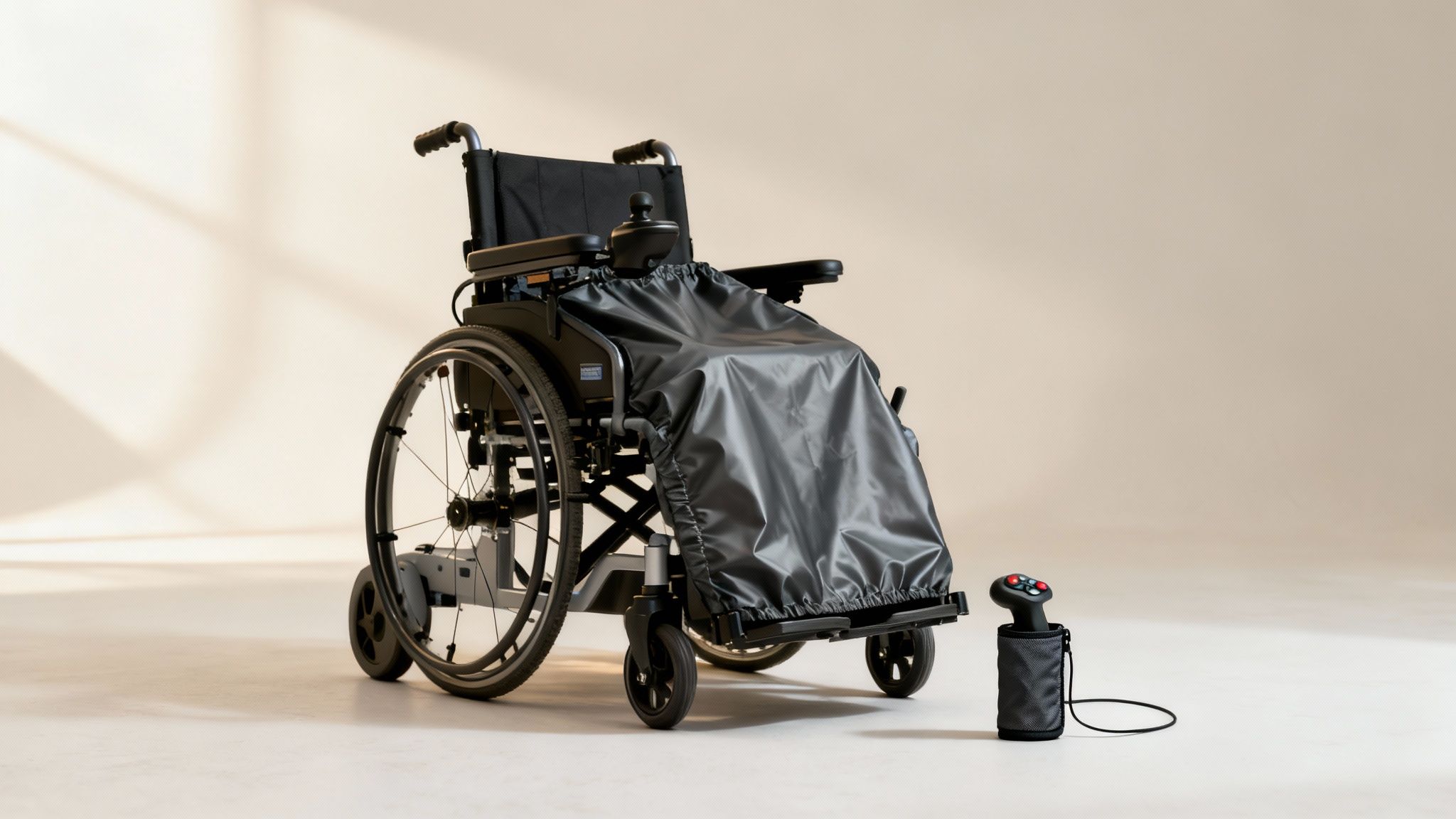
Specialized covers are your first and best line of defense against the elements. These are designed to shield the most vulnerable—and expensive—parts of your wheelchair: the joystick, control panel, and battery housing. Most of these accessories are compact enough to stash in a seat-back pouch, so you're never caught unprepared.
Thinking about how to protect your chair is a lot like selecting gear for rainy days; the basic principle of shielding sensitive equipment from water is exactly the same.
Proactive protection is more than just buying gear; it's about building habits that minimize risk. The best accessory is useless if it's sitting at home when you get caught in a storm.
Beyond the physical gear, a few simple changes to your routine can dramatically reduce your chair's exposure to water. These habits cost nothing but could save you thousands in repair bills down the road. This kind of consistent care is vital, and you can find more great ideas in our guide on 7 maintenance tips to keep your electric wheelchair running smoothly.
Check the Forecast: Before heading out, take 30 seconds to check the weather on your phone. If there’s even a slight chance of rain, you’ll know to grab your protective covers. Simple.
Plan Your Route: When the ground is wet, be mindful of your path. Actively steer around deep puddles and give active sprinklers a wide berth. Water splashing up from below can be just as damaging as rain falling from above.
Know Your Escape Routes: When you’re out and about, make a mental note of nearby covered areas—store awnings, bus stops, or building entrances are perfect. Having a plan for where you can quickly find shelter means you won't panic if the weather turns on a dime.
By combining the right gear with smart, everyday habits, you build a powerful defense for your wheelchair. This approach ensures your mobility aid remains a dependable partner, letting you live your life without constantly worrying about a few clouds in the sky.
Even after you get the hang of the basics, real-life situations can throw you a curveball. Let's tackle some of the most common questions we hear about electric wheelchairs and water, giving you the straightforward answers you need to make smart, safe decisions.
This is a big one, and the answer is almost always a hard no. Standard manufacturer warranties for electric wheelchairs are very clear: they don't cover damage from moisture, liquids, or general environmental exposure. From their perspective, this kind of damage isn't a manufacturing defect but is caused by how the chair is used.
You should always read your warranty documents, of course. But it's safest to just assume that any repairs from water damage will be coming out of your own pocket. This is exactly why being proactive and protecting your chair from the get-go is so incredibly important.
We strongly advise against using a standard electric wheelchair in these spots. The risk is much bigger than just a little splashing. Sand and saltwater, in particular, are brutally destructive to your chair's most sensitive parts.
Unless you own a specialized, all-terrain model built specifically for these environments, it's best to steer clear of beaches and pools entirely. Keeping your chair away from sand and salt will protect its safety and dramatically extend its life.
The bottom line is simple: a standard power chair is made for sidewalks and indoor floors, not sand and surf. The risk of permanent, expensive damage is just too high.
Yes, truly waterproof models are out there, but they're rare, highly specialized, and come with a much higher price tag. These chairs are usually designed for specific situations, like roll-in showers or aquatic therapy, and they often aren't practical for everyday mobility.
For most people, a good water-resistant chair (look for an IPX4 rating) paired with the right protective gear is the most practical and affordable way to go. If a company ever claims their chair is "waterproof," always ask for the official IP rating to see exactly what that means.
Protecting your freedom of movement starts with a reliable chair and knowing how to care for it. Here at Electric Wheelchairs USA, we have a huge selection of quality power chairs and all the accessories you need to stay on the move, come rain or shine. Check out our expert guides and find the perfect ride for your lifestyle.
Find Your Perfect Mobility Solution Today at Electric Wheelchairs USA


Leave a comment